| Key Takeaways |
|---|
| Soil temp is your trigger: 55°F for cool-season grasses, 65°F for warm-season types — not the calendar date. Less is more in spring: Target 0.5–1 lb. of nitrogen per 1,000 square feet. Grass type dictates product: Fine fescue, centipede, and Zoysia need far less nitrogen than Bermuda or Kentucky bluegrass. Mixed lawns need spot treatment: In the transition zone, feed only the green, actively growing areas first. |

The best spring fertilizer depends on your grass type — not just whatever’s on sale at the hardware store. To get the best results, wait until your grass is actively growing before applying nutrients. This means feeding cool-season lawns in early spring, but waiting until late spring for warm-season types.
Choosing the right product is just as important as timing. In this guide, lawn care pros break down exactly which fertilizers work best for each grass type, when to apply by region, and how much nitrogen to use — without overdoing it.
If you want expert results without the hassle, Lawn Love’s local pros select the exact fertilizer your lawn needs to thrive this season.
Quick reference: Spring fertilizer by grass type
| Grass Type | Ideal N-P-K | Spring Rate (per 1,000 sq ft) | Timing Trigger |
|---|---|---|---|
| Kentucky bluegrass | 4-1-2 or 16-4-8 | 0.5–0.75 lb. N | Soil 55°F |
| Perennial ryegrass | 4-1-2 or 16-4-8 | 0.75–1 lb. N | Soil 50–55°F |
| Tall fescue | 5-1-1 or 10-0-2 | 0.5–1 lb. N | Late March–April |
| Fine fescue | Low-N (6-4-0 or 9-0-0) | 0.5 lb. N max | Soil 50–55°F |
| Bermudagrass | 4-1-2 or 3-1-2 | 0.5–1 lb. N | After full green-up, post-frost |
| St. Augustine | 1-0-1 + iron (15-0-15) | 0.5–1 lb. N | Soil 65°F+, after last frost |
| Zoysiagrass | 16-4-8 or low-N | 0.5–1 lb. N max | Soil 65°F+, fully green |
| Centipedegrass | 15-0-15 (very low N) | 0.25–0.5 lb. N | Late spring, soil 65°F+ |
| Bahiagrass | 4-1-2 or 16-4-8 | 0.5–1 lb. N | After green-up |
How to read N-P-K ratios: The 3 numbers on a fertilizer bag represent the percentage by weight of nitrogen (N), phosphorus (P), and potassium (K). To compare brands, divide each number by the smallest — a 16-4-8 bag becomes a 4-1-2 ratio. See our complete guide: What is N-P-K? A Guide to Understanding Fertilizer Ratios.
Best spring fertilizers by cool-season grass type
Before you apply: Fertilize based on soil temperature, not the calendar. As Cory Bettinghouse, owner of Cory’s Lawn Service in Reno, NV, puts it: “I don’t approve any cool-season fertilization until we hit 50°F soil temp for three consecutive days.”
Read more: Guide to Cool-Season Grasses
Kentucky bluegrass

This grass requires significant nitrogen to fuel its spreading underground stems (rhizomes). However, more isn’t always better in spring.
Steve Rice, owner of Lawn Kings, says, ”For Kentucky Bluegrass in early spring, I lean toward a controlled, slower-release option like Milorganite rather than a quick-hit product, because fast nitrogen can create lush top growth without strong roots, especially after winter stress.“
Bettinghouse adds that high-nitrogen “bombs” (like 30-0-4 blends) can actually trigger lawn diseases in bluegrass. Balanced ratios like 16-4-8 produce better root development.
Recommended products:
- Milorganite (6-4-0) for slow-release organic option
- The Andersons PGF 16‑0‑8 or 16‑4‑8 (slow‑release “set and forget” synthetic)
- Jonathan Green Green-Up (29-0-3): Contains iron for deep greening.
Spring application rate: 0.5-0.75 lb. nitrogen per 1,000 square feet
Timing: Light slow-release around early spring (when forsythia blooms) and late spring (6 weeks later). Skip if fall-fertilized; apply only if the lawn looks pale or thin.
Warning: Some experts recommend 32-0-4 products like Scotts Turf Builder Lawn Food for quick/slow nitrogen mix and green-up on established Kentucky bluegrass. Be cautious—calculate exact rates to avoid excess top growth, weak roots, or disease risks.
Read more: Kentucky Bluegrass: How to Grow and Care for It
Perennial ryegrass

This grass type is famous for its quick green-up and ability to handle foot traffic. It reacts fast to fertilizer, so you should monitor soil temperatures before applying.
Brad Saunders, president of Heroes Lawn Care in Omaha, NE, says moderate feeding (around 0.75 lbs. of nitrogen) is usually enough; overdoing it just “means more mowing and less root strength.”
As with bluegrass, Bettinghouse advises balanced ratios like 16-4-8 for root strength over high-nitrogen products.
Recommended products:
- Safer Brand Lawn Restore (9-0-2) for organic approach
- The Andersons PGF Complete (16:4:8)
Application rate: 0.75-1 lb. nitrogen per 1,000 square feet
Timing: Single early spring application (soil temp 50–55°F or forsythia bloom) often enough—especially if fall-fertilized.
Read more: Perennial Ryegrass: How to Grow and Care for It
Tall fescue
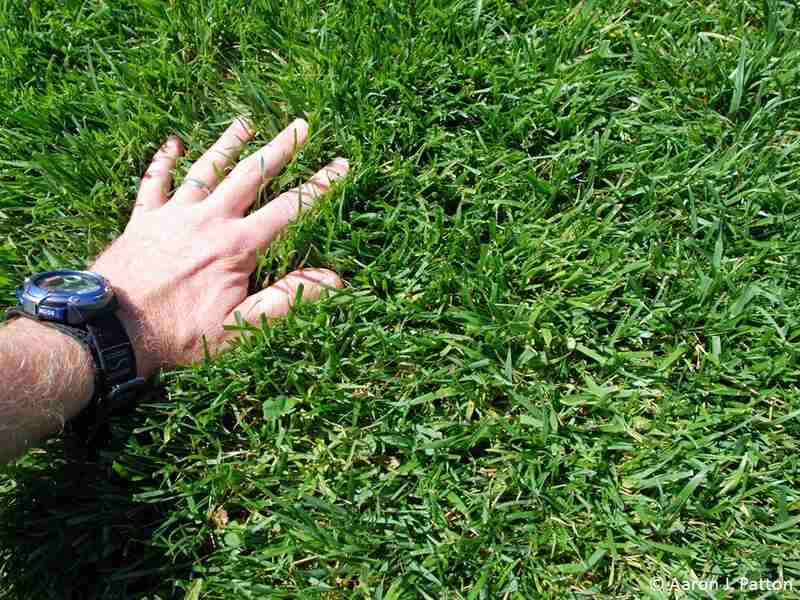
Tall fescue is a low-maintenance grass with deep roots that help it handle drought. Because it grows in clumps rather than spreading, it does not need aggressive feeding. Saunders suggests a spring “balanced, lower nitrogen approach” for this type.
“A product like a 10-0-2 feeds it without forcing growth it can’t sustain. High-nitrogen options can make it look great short term, but stressed later on. Slow and steady tends to win with fescue,” he says.
Recommended products:
- Purely Organic Lawn Food (10-0-2) – matches its low-input needs
- Lebanon Turf ProScape (24-0-11) for denser lawns
Application rate: 0.5-1 lb. nitrogen per 1,000 square feet
Timing: Light spring feeding (late March-April), heavier fall focus
Read more: Tall Fescue: How to Grow and Care for It
Fine fescue

Fine fescue is the most sensitive cool-season grass and needs the least fertilizer of any type. Hamilton warns that “high nitrogen bombs wreck fine fescues” fast. He saw a 29-4-5 blend cause red thread disease and thatch buildup on a client’s lawn in just 3 weeks,
Recommended products:
- Espoma Organic Lawn Food (9-0-0) – gentle, won’t overfeed
- Milorganite (6-4-0)
Application rate: 0.5 lb. nitrogen per 1,000 square feet maximum
Timing: Single light spring application (soil temp 50–55°F or forsythia bloom); especially if fall-fertilized
Read more:
Best spring fertilizers by warm-season grass type
Before you apply: For warm-season grasses, nothing happens until soil temps are consistently above 65°F — which can be as late as mid-May depending on your region. In the transition zone, use a hand spreader to spot-treat only the green, actively growing cool-season patches first. As Bettinghouse puts it, feeding dormant warm-season sections is “just a weed invitation.”
Read more: Guide to Warm-Season Grasses
Bermudagrass

Bermuda is aggressive and hungry, but patience is key in spring. Saunders notes that while Bermuda loves nitrogen, “blasting it right after green-up is usually too much.” Starting light — and waiting until the lawn is fully green after the last frost — prevents weak roots from forming too early.
Recommended products:
- Scotts Turf Builder Lawn Food 32‑0‑4 – quick green‑up with slow‑release tech
- The Andersons PGF Complete 16‑4‑8 – balanced NPK + humic for roots and color
- Down to Earth Bio‑Turf 8‑3‑5 – organic
Application rate: 0.5–1 lb. N per 1,000 square feet per application, with 2–4 applications per growing season for a home Bermuda lawn
Timing: Begin after full green‑up and last frost, then fertilize every 6–8 weeks through summer, stopping 4–6 weeks before first frost.
Read more: Bermudagrass: How to Grow and Care for It
St. Augustine
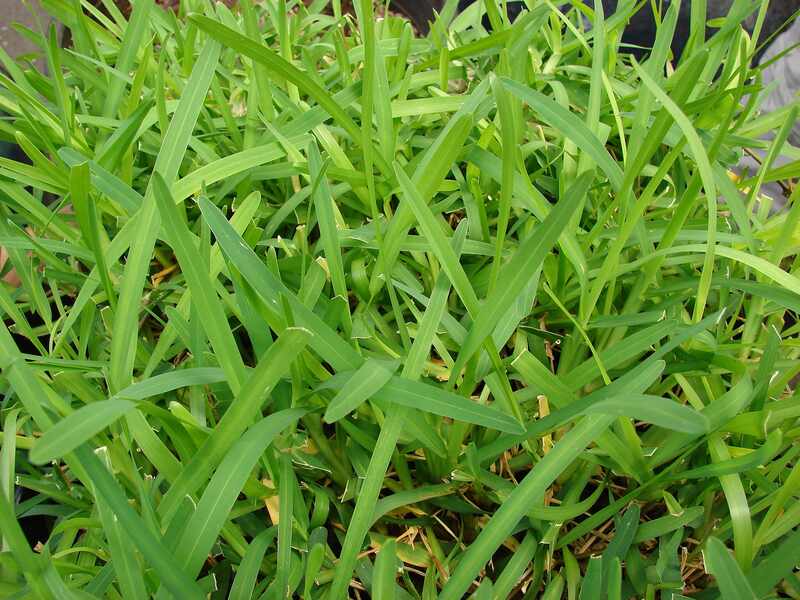
St. Augustine spreads by runners and is very responsive to iron. Excess soluble nitrogen causes weak, floppy growth. Saunders explains that for yellowing lawns, “iron is often the better fix than more nitrogen.”
Recommended products:
- Lesco 15‑0‑15 – Florida‑compliant 1:1 N:K with 3% iron for deep color
- Simple Lawn Solutions Advanced 16-4-8
- The Andersons PGF Complete 16‑4‑8 – NPK balance + humic for roots
Application rate: 0.5–1 lb. N per 1,000 square feet per application (max 1 lb.)
Timing: After the last frost and full green-up (soil temps consistently 65°F+). Avoid June/July application (chinch bug season)
Read more:
- 6 Best Lawn Fertilizers for St. Augustinegrass of 2026 [Reviews]
- St. Augustinegrass: How to Grow and Care for It
Zoysiagrass

Zoysia grows slowly to form a thick carpet but creates heavy thatch if overfed. Saunders warns Zoysia can build too much thatch with too much nitrogen. This grass also isn’t supposed to be extremely dark green — trying to force that look “leads to poor turf health.” Wait until the lawn is 100% green before feeding.
Recommended products:
- Lesco 24‑0‑11 – slow‑release with iron, perfect post‑green‑up
- The Andersons PGF Complete 16‑4‑8 – balanced NPK for healthy density
- Milorganite 6‑4‑0 – gentle organic to avoid thatch buildup
Application rate: 0.5 lb. N per 1,000 square feet (light feeding) to 1 lb. max
Timing: Wait until fully green everywhere (late May typical)—soil 65°F+, no brown patches left
Read more: Zoysiagrass: How to Grow and Care for It
Centipedegrass

Centipede is an ultra-low-maintenance grass that suffers when overfed. Rice warns that homeowners frequently trigger “centipede decline” by using too much product — low-nitrogen formulas should only be used.
Recommended products:
- Ferti‑Lome Centipede Lawn Fertilizer 15‑0‑15 – low N + iron for safe greening
- Simple Lawn Solutions 15‑0‑15 Liquid – hose-end convenience
- Lesco 15‑0‑15 – balanced micronutrient formula
Application rate: 0.25-0.5 lb. nitrogen per 1,000 square feet (very light)
Timing: Late spring only (soil 65°F+, fully green)—one app prevents decline
Read more:
- Centipedegrass: How to Grow and Care for It
- 5 Best Lawn Fertilizers for Centipedegrass of 2026 [Reviews]
Bahiagrass

Bahiagrass thrives in poor soil without much help, making it one of the most forgiving grass options for homeowners. Saunders says it’s simple: “A standard 20-5-10 is usually enough to get it through spring. It responds well to basic feeding and doesn’t need to be pushed hard.”
Recommended products:
- Lesco 16‑4‑8 – slow‑release balance for sandy soils
- Milorganite 6‑4‑0 – organic with iron for yellowing
- Scotts Turf Builder Southern Lawn Food 32‑0‑10 – easy warm‑season green‑up
Application rate: Apply 0.5-1 lb. nitrogen per 1,000 square feet to avoid burn while promoting steady growth.
Timing: Fertilize after green-up in spring, repeating 2-4 times through summer-fall for best results.
Read more: Bahiagrass: How to Grow and Care for It
Regional timing guide: When to apply by city
Spring fertilization timing varies by about 8 weeks, depending on your location — from early March in Miami to mid-May in Seattle. Soil temperature and weather are the most critical factors — not the calendar. These historical averages help you plan, though windows shift annually due to late frosts or cold springs. Always check soil at a 4-inch depth for several consecutive days with a soil thermometer before starting.
*Dates reflect average soil temperature windows recorded over the last five years (2020–2025).
| City | Application window | Expected soil temp (4”-6”) |
|---|---|---|
| Deep south | ||
| Miami, FL | Early to mid-March (March 1-20) | Consistently 70°F+; warm-season grasses actively growing |
| Houston, TX | Early to mid March (March 1-20) | 65°F+ sustained early in period |
| Southwest and mild coasts | ||
| Phoenix, AZ | Mid March (March 11–20) | Reliably 65–70°F; warm-season green-up begins |
| San Diego, CA | Late March to mid April (March 11– April 10) | 60–69°F; warm-season green-up begins |
| Transition zone | ||
| Atlanta, GA | Late March–early April (March 20–April 10) | Cool: 55°F+ late March (tall fescue).Warm: 65°F+ mid-April (Bermuda/Zoysia) |
| Dallas, TX | Late March–early April (March 20–April 10) | Cool: 55°F+ late March (tall fescue)Warm: 65°F+ early April |
| Raleigh, NC | Late March–early April (March 20–April 10) | Cool: 55°F+ late March (tall fescue).Warm: 65°F+ early April |
| Charlotte, NC | Late March–early April (March 20–April 10) | Cool: 55°F+ late March (tall fescue).Warm: 65°F+ early April (Bermuda/Zoysia) |
| Mid-Atlantic & Midwest | ||
| St. Louis, MO | Early April (April 1–15) | Cool: 55°F+ early April (Kentucky bluegrass/fescue)Warm: 65°F+ mid-April (Bermuda) |
| Philadelphia, PA | Early April (April 1–15) | Soil 55–62°F; cool-season (tall fescue/Kentucky bluegrass) active |
| Kansas City, MO | Early–mid April (April 1–20) | Soil 55–64°F; cool-season (tall fescue/bluegrass) main spring feeding |
| Columbus, OH | Early–mid April (April 5–20) | Soil 52–62°F; cool-season (perennial ryegrass/fescue) growth peaks |
| Northern climates | ||
| Chicago, IL | Late April (April 20–30) | Soil 55°F+ sustained late April; cool-season grasses fully active |
| Boston, MA | Late April–early May (April 25–May 5) | Soil reaches 55°F sustained; cool-season (fescue/bluegrass) spring feeding |
| Minneapolis, MN | Late April–early May (April 25–May 10) | Soil 55°F+ late April/early May; northern cool-season timing |
| Denver, CO | Late April–early May (April 25–May 5) | Soil 55°F+ despite dry air; cool-season (Kentucky bluegrass/fescue) |
| Portland, OR | Early–mid May (May 1–20) | Soil 55°F sustained early May; cool-season (perennial ryegrass/fescue) |
| Seattle, WA | Early–mid May (May 1–20) | Soil 55°F+ mid-May; cool-season grasses are active |
*These dates reflect the average soil temperature windows recorded over the last 5 years (2020 to 2025).
Pro Tip: Check local extension offices or soil sensors (like GreenCast) for your exact ZIP code.
Read more:
- Best Lawn Fertilizers for Texas
- When to Fertilize Your Lawn in East Texas
- When to Fertilize Your Lawn in South Texas
City-specific alerts: The “Red Zone” list
We have identified specific cities where environmental factors make timing even more critical.
Budget alert: High water rates
Cities: Buckeye, AZ, Goodyear, AZ; Brownsville, TX, Bakersfield, CA
These rank among the most expensive cities for lawn watering. Early fertilization pushes growth and increases water demand. Residents in these areas should use slow-release fertilizers to avoid spiking their water bills.
Worried about your wallet? Check our complete guide to see if your city is among the red flags for high costs.
The allergy capitals
Cities: Washington, D.C., Redding, CA, Virginia Beach, VA, Albany, NY
These rank as the worst cities for grass allergies. Homeowners here should avoid high-nitrogen fertilizers that stimulate heavy flowering and pollen production.
Breathe easier: Check our complete guide to see if your city is among the red flags for allergy risks.
Extreme heat and drought:
Cities: Palmdale, CA, Scottsdale, AZ, Reno, NV, Bakersfield, CA, and Fresno, CA
These are ranked as cities “Where Lawns Go to Die” due to drought and heat. If you live here, skip the synthetic nitrogen in favor of soil amendments like compost or humic acid to retain moisture.
Don’t let your lawn burn out: Check our complete guide to see if your city is among the environmental red flags.
Strict fertilizer bans
Cities: Portland, ME, Jupiter, FL; Maui, HI, Hallowell, ME
Many municipalities enforce strict “blackout dates” or nutrient bans to protect local waterways from runoff. Residents in these areas must check local ordinances and strictly stick to phosphorus-free products during restricted months to avoid fines.
Avoid the fines: Check our complete guide to see if your city is among the red flags for local regulations.
FAQs
No, different grass types have unique needs for nitrogen, timing, and nutrients. A single fertilizer may harm some grasses while starving others. Use a balanced, slow-release formula as a safe compromise, or treat sections separately.
In the transition zone, mixed lawns are tricky, so follow soil‑test results and avoid extreme high‑nitrogen products.
You can use photo identification guides online or take a sample to a local nursery. Generally speaking, if your grass stays green in winter (in the North), it is a cool-season grass. If it turns brown in winter, it is a warm-season grass.
Organic fertilizers like Milorganite are slow-release. They are excellent for soil health but work more slowly in cool spring temperatures. Synthetic fertilizers provide a faster green-up but carry a higher risk of burning the lawn if applied incorrectly.
Apply when light moisture is available to activate granules — ideally the day after a light rain, or plan to water lightly after application. Avoid heavy rain within 24 hours, which can wash nutrients away before they absorb. Never apply to bone-dry, heat-stressed grass.
Yes, with one important caveat: pre-emergent herbicides prevent seed germination — including grass seed. If you plan to overseed or patch bare spots this spring, skip the combo product and use a straight fertilizer. For established lawns with no reseeding planned, a fertilizer-plus-pre-emergent is an efficient way to feed and prevent crabgrass in one step.
Let a pro handle your fertilization needs
Choosing the right bag is only the first step. You also have to store the leftovers, calibrate your spreader, and water it in at the right time. Why spend your weekend doing math and pushing a spreader?
Lawn Love connects you with local lawn care pros who can handle everything from fertilization and aeration to weed control. Get a free instant quote today and enjoy a greener lawn without the work.
Main Image: Applying granular fertilizer with a drop spreader. Photo Credit: Brebca / Adobe Stock
Related Posts:


