| Key Takeaways |
|---|
| • Grass type decides everything: Cool-season grasses can stay green all winter with the right care, while warm-season grasses naturally go dormant and brown. • Overseeding is the Southern shortcut: Sow perennial ryegrass over a dormant warm-season lawn about four weeks before the first expected frost, roughly October in Texas and the Southeast, for green color through the cold months. • Protect what you have: Staying off frozen grass, keeping snow piles off the lawn, and using gentler de-icers prevent brown patches that linger into spring. |

Knowing how to keep grass green in winter starts with your grass type. It’s natural for turfgrass to go dormant when the cold weather arrives, but your lawn doesn’t necessarily have to hibernate for the winter.
When you’re ready to put your lawn to bed for those extra frosty months, use our guide on “How to Winterize Your Lawn” for healthier grass come spring.
Fall feeding is what carries the color through the cold, and a local pro can cover that with a round of lawn treatment before the first frost.
Know your grass type first

Warm-season grasses go dormant and brown no matter what you do. Identify which you have before you spend a dollar on seed or fertilizer.


| Grass type | Common varieties | Winter color |
|---|---|---|
| Cool-season (North) | Kentucky bluegrass, perennial ryegrass, tall fescue, fine fescue | Stays green with care |
| Warm-season (South) | Bermudagrass, Zoysiagrass, St. Augustinegrass, centipedegrass | Browns at first frost |
| Transition zone | Either type, often a mix | Depends on the grass |
Not sure which you have? Watch when it’s most active. Grass that thrives in spring and fall but struggles in summer heat is cool-season. Grass that loves summer and browns completely in winter is warm-season.
Read more:
- Lawn Care Calendar for Warm-Season Grass
- Lawn Care Calendar for Cool-Season Grass
- Guide to Growing Grass in the Transition Zone
Overseed with ryegrass for winter color

Overseeding is the one reliable way to keep a warm-season lawn green all winter. You sow perennial ryegrass over dormant Bermudagrass, Zoysiagrass, or bahiagrass. The ryegrass carries the color until your base grass wakes up in spring.
Cool-season lawns don’t need it. Transition zone lawns need it only if the base grass is warm-season.
Time it right: Seed about 4 weeks before your first expected frost, once soil temperature drops to about 70 degrees, roughly October in most of Texas and the Southeast. Seed too early and the still-growing warm-season grass will crowd out the young ryegrass.
How to overseed a dormant lawn:
- Mow lower than usual and bag the clippings.
- Rake hard or dethatch to pull up the spongy layer of dead stems between the grass and the soil, since seed won’t sprout sitting on top of it.
- Spread perennial ryegrass with a broadcast spreader at the overseeding rate on the bag, not the heavier new-lawn rate.
- Keep the top inch of soil moist until the seedlings come up.
One caution: Ryegrass competes with your base grass in spring and can slow its green-up. If your lawn is already thin or stressed, let it rest instead.
Fall fertilization
According to Virginia Tech Extension, fall is ideal for fertilizing cool-season grasses, as cooler temperatures and shorter days promote maximum root growth.
What to feed, by grass type:
- Cool-season grasses: Apply a nitrogen-rich fertilizer between September and November, using a ratio like 20-8-8 or 24-0-12.
- Warm-season grasses: Skip fall feeding and wait for spring, since dormancy is coming. Add potassium in early September only if a soil test calls for it.
- Transition zone lawns: Follow the schedule for whichever grass makes up most of your lawn.
If you’re ever in doubt about what your lawn needs, test your soil first.
Read more:
How short to mow before winter
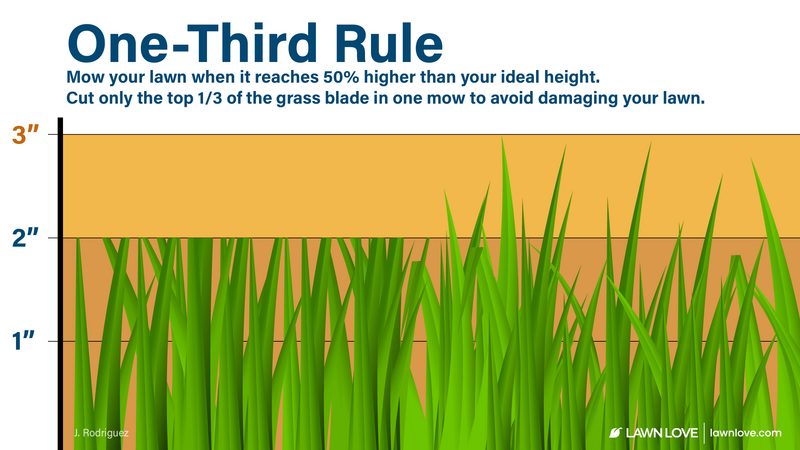
Go shorter than usual, but don’t scalp it. Grass left too tall mats down under snow and invites disease, while grass cut too short loses the blade surface it needs to feed the roots.
As Micah Burgess, general manager at Heroes Lawn Care in Omaha, Nebraska, advises, “For the last mow, I would keep the grass around 2-2.5 inches.”
Final mowing heights:
- Cool-season grasses: Drop to about 2 to 2.5 inches over the final 2 or 3 mows
- Warm-season grasses: Finish at roughly 1.5 to 2 inches
- Never cut more than a third of the blade in a single pass
Then get the leaves off. A thick leaf layer blocks sunlight from grass that’s still trying to stay green, traps moisture against the blades, and gives snow mold a place to start.
Rake, blow, or mulch leaves into fine pieces with your lawn mower so they break down instead of smothering the turf.
Read more: How Short to Cut Grass Before Winter
Strategic winter watering

Your lawn needs a lot less water in winter, but your grass roots remain active even when top growth stops. University of Minnesota Extension shows cool-season grass roots keep growing when soil temperatures stay above 32 degrees. Even dormant-looking grass needs moisture to survive cold stress.
Winter watering guidelines:
- Cool-season grasses: About 1 inch in a single morning session, every 2 to 3 weeks, when temperatures are above 40 degrees with no snow cover
- Warm-season grasses: One deep watering per month, and only during dry stretches longer than 3 weeks
- Never water when temperatures will drop below 32 degrees within 24 hours
- Skip watering after recent rain or snow
- Focus on areas that get winter sun exposure
The biggest mistake homeowners make is overwatering dormant warm-season grass, which can actually encourage disease problems when spring arrives. Dr. Eric DeBoer of Louisiana State University in Baton Rouge, Louisiana, keeps the winter rule simple: “Let it rest. No irrigation unless you’re in an extreme drought.”
Read more:
Protect grass from foot traffic
Stay off the lawn until the frost melts. Water inside frozen grass blades turns to ice, so they snap underfoot, and a path walked repeatedly all winter leaves brown patches that may not heal until spring.
How to limit winter traffic damage:
- Wait for frost to melt completely before stepping on the lawn
- Set stepping stones or temporary walkways along routes you use often
- Stick to one path so damage stays in a single strip that’s easy to repair in spring
For pet owners: Create a special bathroom spot for dogs in winter using gravel or mulch. Dog urine’s high nitrogen burns grass worse on winter-stressed lawns.
Read more:
Smart snow management

Leave the snow where it falls, because it insulates grass against extreme cold. Bare lawns exposed to below-zero temperatures are the ones most likely to suffer winterkill, the dead patches you find when the snow finally clears.
How you handle snow affects your lawn come spring. Never pile snow directly on grass when shoveling driveways and walkways. The weight compresses soil and creates perfect conditions for snow mold. Pile snow on garden beds or hard surfaces instead.
Handle winter snow and ice this way:
- Warm-season lawns: Leave snow alone unless it’s compacted or forming ice sheets
- Cool-season lawns: If snow sits for weeks, gently remove the excess to improve air circulation and head off snow mold, but leave a protective layer
- Swap the rock salt: Use calcium chloride or magnesium chloride on walkways and driveways instead, since salt burns roots and alters soil chemistry
- Build a barrier: Stakes with burlap or snow fencing steer drifts away from vulnerable spots
Read more:
- How to Remove Snow Safely
- What is Pink Snow Mold and How Do You Get Rid of It?
- What is Gray Snow Mold and How Do You Get Rid of It?
FAQs
How long does it take grass to turn green after winter?
Cool-season grasses green up within 2 to 3 weeks of soil temperatures passing 50 degrees, typically mid-to-late March. Warm-season grasses wait for soil near 65 degrees and often don’t fully color up until late April or May.
What is the fastest way to make my lawn green again in spring?
Rake lightly to lift matted blades, then fertilize once the grass is actively growing again. Feeding a still-dormant lawn feeds the weeds instead, and deep, infrequent watering does more for color than daily sprinkling.
Does lawn paint work on dormant grass?
Yes, turf colorant works on dormant grass and holds its color for 6 to 10 weeks, depending on rainfall and traffic. Apply it on a dry day above 50 degrees, and mask driveways and walkways first, since the pigment stains concrete. Keep in mind that it is purely cosmetic and adds nothing to the lawn’s health.
Is it worth investing in a lawn cover or protection system?
Most homeowners don’t need covers, and they often do more harm than good by trapping moisture and encouraging mold. Only golf greens and sports fields benefit from professional covers built for airflow.
Winter lawn success
Keeping grass green in winter isn’t just about color; it’s about keeping your lawn healthy through the cold months. Lawns that get winter attention green up faster, grow thicker, and need fewer repairs than neglected yards.
That work adds up fast, though, and most of it lands in the shortest, coldest weeks of the year.
LawnLove can connect you with local lawn care professionals to handle everything from fall preparation and tree trimming to leaf removal and spring recovery, as well as lawn mowing, ensuring your grass receives the right care.
Main Image: Green grass emerging through melting snow. Image Credit: be free / Adobe Stock
Related Posts: