| Key Takeaways |
|---|
| • Cool-season grasses: Install early fall (late August-September) or early spring (March-April) • Warm-season grasses: Install late spring through early summer (May-July) • Avoid extreme weather: Skip mid-summer heat and winter freezing periods • Root establishment time: Plan for 2-3 weeks of restricted lawn use |

The best time to lay sod depends on what type of grass you have. Cool-season grasses like Kentucky bluegrass and tall fescue work best when you install them in early fall (late August to September) or early spring (March to April). Warm-season grasses like Bermuda, Zoysia, and St. Augustine do better in late spring through early summer (May to July).
If the idea of hauling heavy rolls of dirt sounds like a recipe for a headache, Lawn Love’s local pros handle everything for you.
Best time to install sod by grass type
Sod installation timing really depends on what kind of grass you’re planting. Each one has different needs based on how it grows throughout the year. Knowing when to install sod ensures your investment takes root before the weather turns:
| Grass Type | Best Installation Time | Soil Temp |
| Cool-season | Early fall/spring | 50-65°F |
| Warm-season | Late spring-summer | 65-70°F+ |
Cool-season grasses

- When to lay sod for cool-season grasses: Early fall (late August-September)
- Alternative: Early spring (March-April)
- Grasses: Kentucky bluegrass, tall fescue, perennial ryegrass, fine fescue
Cool-season grasses grow best when temperatures are between 60 and 75 degrees F. These grasses slow down or stop growing when it gets hot or cold.
“Soil temperature is the most reliable indicator,” says Brad Saunders, brand vice president at Heroes Lawn Care. “Once it consistently drops below about 50 degrees, root growth slows and stops altogether. You notice reduced grass growth and early browning, even if the air temperature is still mild. Planting sod after this point usually results in poor rooting, risk of water damage, or failure to establish.”
Warm-season grasses

- When to lay sod for warm-season grasses: Late spring to early summer (May-July)
- Grasses: Bermudagrass, St. Augustine, Zoysia, centipede, bahiagrass
Warm-season grasses need soil warmer than 65°F to grow roots (75°F+ is even better). You want to time it so they have a full growing season before winter. By May, soil temperatures are above 70°F in most places. Zoysia and other slow-growing types really need this extra time to establish strong root systems before dormancy.
While it’s best to wait for the growing season, you might be tempted to try winter installation.
“Dormant warm-season sod installation in winter can be a smart move in the right conditions, but it’s not foolproof,” says Steve Rice, owner at Lawn Kings. “When done correctly on properly prepared soil, with minimal traffic, and no standing water, it can allow roots to settle before spring green-up. The risk comes from freeze-thaw cycles and poor drainage, which can shift sod or rot roots before growth resumes.”
Seasonal installation guide

These seasonal guidelines change based on where you live. Use your local climate and frost dates to adjust these recommendations.
Spring
Cool-season grass: Early spring (April through May) can be a decent backup plan, although fall is generally a better option. If you must install it now, wait until the soil temps are above 50°F.
Warm-season grass: Wait for soil temperatures to hold steady above 65°F, usually in May or June. Planting earlier in cold soil isn’t a good idea because the sod will simply sit dormant until the ground warms up.
Saunders says one downside to laying sod in spring is it takes longer for roots to take hold.
“Sod generally establishes faster in the fall than in the spring because the soil is warm but the air isn’t hot. In spring, cooler soils combined with increasing sun and heat can slow rooting and place additional stress on young roots. As a result, fall sods can handle light traffic sooner, whereas spring sod benefits from extra time before being walked on.”
Read more: How to Tell If Your Grass is Dead or Dormant
Summer
Can you lay sod in summer? Rice says summer is a risky time due to the threat of disease.
“Summer installation is possible, but disease pressure is the biggest non-water risk,” he says. “High soil temperatures and constant moisture can encourage fungal issues like Pythium or root decline, especially if drainage or airflow is poor. That’s what makes midsummer sod risky for most homeowners.”
Cool-season grass: You should avoid it. Heat stops root growth, meaning you’ll use a lot of water just to keep the grass alive.
Warm-season grass: Early summer (May through June) is the best time. July and August work, but it’s riskier due to the intense heat. If you install it mid-summer, be ready to water 2 to 3 times a week to prevent scorching.
Fall
Cool-season grass: Late August through September is the best time. You should install it at least 6 weeks before the first expected frost.
Warm-season grass: Early September is okay in warmer zones, but late fall is risky. As the grass goes dormant, the roots stop growing. If it hasn’t established itself by the first freeze, it won’t survive the winter.
Read more: Fall Lawn Care Tips
Winter
Avoid installing sod in winter for all grass types unless you live in a region that stays warm year-round, like South Florida or Southern California. For most of the country, frozen ground and snow make installation impossible and will likely kill new roots. If you are in a cold climate, wait until spring.
“Dormant warm-season sod installation can work in experienced hands, but for most homeowners, it’s risky,” Saunders says. “Dormant sod can survive winter, but any unexpected freezes, ice, or excess moisture can hurt it.”
Read more:
- What is Dormant Seeding?
- What’s the Difference Between Frost Seeding and Dormant Seeding?
- How to Keep Grass Green in Winter
Climate considerations

Air temperature can be misleading, and your grass roots need warm soil to function.
Rice shared a visual trick with me: “Once soil temps consistently drop below about 50 degrees F, root growth slows dramatically. A visual red flag is sod that stays green on top but doesn’t knit into the soil after a couple of weeks. At that point, you’re relying on winter survival rather than true establishment, which raises the risk.”
Northern climates (Zones 3-5)
- Spring: The ground needs to thaw and warm up to at least 50°F, which usually takes until late April or May.
- Fall: You have a longer window than most people realize. Early fall is best, but you can install sod before the first frost, often into October or November.
Read more: Lawn Care Calendar for Cool-Season Grass
Transition zones (Zones 6-7)
- Cool-season grass: Fall is the safest period, from mid-August to mid-October. Spring installs are trickier and usually die in the summer heat because the roots aren’t deep enough yet.
- Warm-season grass: Wait for late spring or early summer (May/June). The soil needs to be warm (65 to 75°F) for the roots to establish before summer.
Southern climates (Zones 8-10)
- You have the most flexibility. April through August is the ideal time for warm-season grass.
- Winter: In mild areas like South Florida, you can lay sod year-round. Just keep in mind that grass planted in January grows much more slowly than grass planted in June.
Read more: Lawn Care Calendar for Warm-Season Grass
What to avoid: Poor installation timing
Knowing when not to install sod is just as important as knowing when to lay it.
Don’t install when:
- Extreme heat (90°F+ sustained): Constant high heat is hard for new sod because it stresses the grass, and you need to water it constantly just to keep it alive. It isn’t worth the hassle or the high water bill. Heat-stressed sod is also more prone to disease.
- Drought: New sod has shallow roots and needs frequent watering to establish. Installing during a water restriction or severe drought makes it nearly impossible to keep the grass alive.
- Ground is frozen: Sod needs to sit flush against the soil to grow. Frozen ground is hard and uneven, creating air gaps that will dry out and kill your new roots.
- Late fall for warm-season grasses: If frost is expected within a month, wait until spring. Warm-season sod goes dormant in the cold. If it hasn’t rooted before it goes to sleep, it will likely dry out and die over the winter.
- Muddy soil: Installing sod on soaking wet soil is a bad idea because the soil is compacted, choking off the oxygen that new roots need to grow.
Warning signs you should wait
- Sod suppliers are low on stock or are only selling brown, dormant grass when you want green
- You would need to mist the grass multiple times a day just to stop it from wilting
- The weather forecast shows a heat wave or a freeze coming in the next week
FAQs
Wait 2-3 weeks before allowing regular foot traffic. Rice says, “Sod generally tacks down faster in fall than spring because soil moisture is steadier and heat stress is lower. In fall, light foot traffic may be safe in 10-14 days, while spring installations often need closer to two to three weeks, depending on temperatures and watering.”
Prepare your soil 1-2 weeks before installation. This gives you time to till, remove debris, add amendments, and level the grade while allowing the soil to settle and consolidate. Water the area a day or two before laying sod so the soil is moist but not muddy—this promotes faster root establishment. Avoid preparing more than 3-4 weeks ahead, as weeds can take hold in bare soil.
Light to moderate rain after installation is actually beneficial—it helps settle the sod and keeps it moist during establishment. Heavy rain, however, can wash sod away on slopes, create uneven settling, or cause fungal problems if the lawn stays waterlogged. If you’ve already installed and heavy rain hits, stay off the lawn until it dries to avoid creating ruts. Once dry enough to walk on, check for lifted edges or low spots and address them by adding topsoil as needed.
Don’t let your weekend go to sod
Timing your sod installation correctly sets up your lawn for success. Install cool-season grasses in early fall or spring, and warm-season grasses in late spring through early summer. With the right timing, your sod will establish quickly, require less water, and give you a thick, healthy lawn.
If the idea of hauling rolls of sod and installing them doesn’t sound that appealing. Lawn Love’s local pros know your local climate and optimal timing and can handle everything for you.
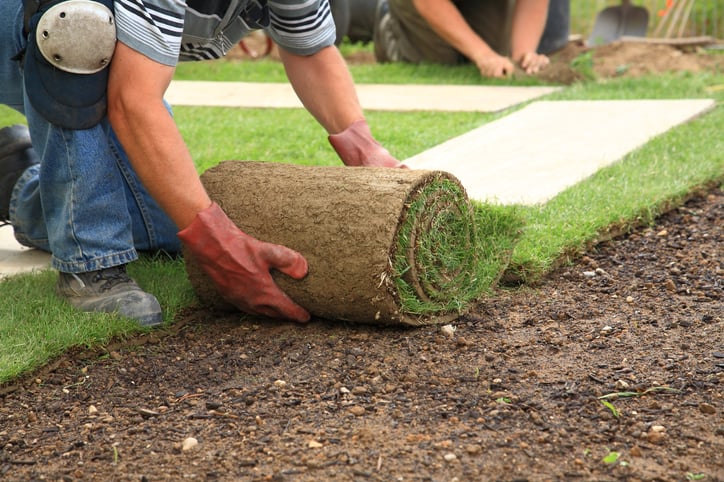
Main Image: Young man laying sod on backyard soil. Image Credit: New Africa / Adobe Stock
Related Posts: