| Key Takeaways |
|---|
| • Repeating the same mowing direction blocks light from the lower canopy, suppressing lateral growth that thickens your lawn. • Changing your mowing direction every time you mow also prevents ruts, compaction, scalping, and grain. • Rotate between 4 directions: N–S, E–W, NW–SE, NE–SW. At a minimum, alternate perpendicular directions. |
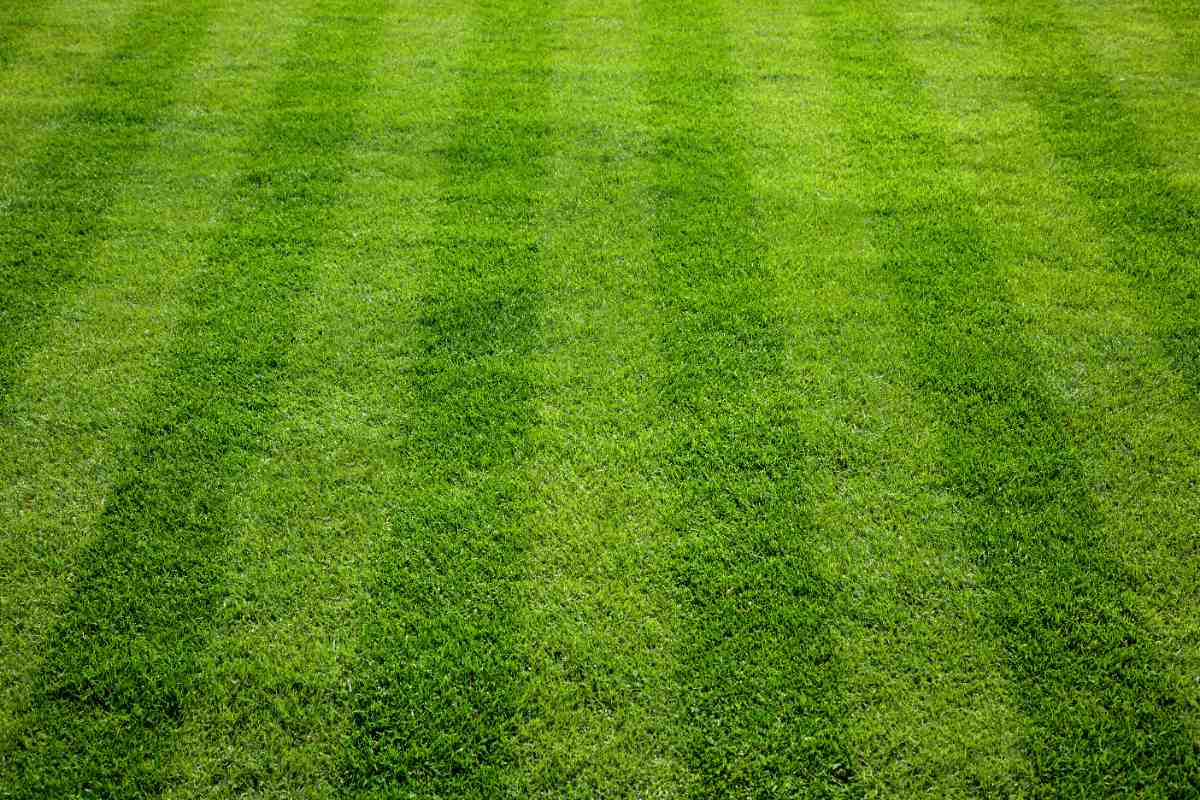
Changing your mowing direction every time you mow prevents tire ruts, soil compaction, scalped spots, and grass that leans instead of standing upright. It’s a simple habit that improves your lawn’s health and appearance over time.
It might sound over the top, but the difference shows fast. If you’d rather skip the planning entirely, Lawn Love’s local mowing pros can handle the right pattern, height, and timing for your grass type.
How does mowing direction affect lawn health?
Mowing in the same direction every time sets off a cause-and-effect chain due to three mechanisms that gradually thin your lawn. The damage isn’t visible after a single mow, but over weeks and months, it adds up, reducing turf density.
Grass blades lean permanently, reducing light penetration to the lower canopy. Less light at the soil level results in your lawn producing fewer new side shoots that emerge from the base of the plant. Less lateral spread results in thinner, less-dense turf over time.
Mower wheel traffic concentrates in the same strips week after week, compacting the soil along the repeated wheel paths. Compacted soil restricts the root growth below the surface.
Uneven wear shows up across your lawn from making repeated passes in the same direction. The same spots get scalped, the same turning points get stressed, and the same paths thin out over time. Those weakened areas become entry points for weeds, insects, and disease.
Changing direction corrects all three. According to the University of Massachusetts Amherst Extension, the direction of mowing should be varied with each mow to promote upright shoot growth. Mowing at right angles on alternate mowings can minimize “grain” where the grass grows or leans horizontally.
Michigan State Extension adds that varying mowing direction can reduce wear patterns.
Mowing direction effects on lawn health
| Mowing approach | Effect on grass | Effect on soil |
| Same direction every mow | Grain (blades lean one way); uneven, ragged cuts; weaker turf | Tire ruts; compaction along wheel paths; reduced root depth |
| Alternating between two directions | More upright blades; cleaner cuts; denser growth | Compaction is distributed across two axes |
| Rotating 3+ directions (including diagonal) | Maximum upright growth; best light penetration to lower canopy | Even pressure distribution across the full lawn area; no compaction lanes |
Rotating through all 4 directions over a 4-week cycle gives your lawn the most even coverage. Here’s what that looks like:
7 benefits of changing your mowing direction
If you’ve ever watched a lawn care crew work, you may have noticed they rarely mow a lawn in the same direction twice. There’s a reason for that, and it’s not crew preference.
1. Enhances aesthetic appeal
Mowing the same direction every week leaves your lawn looking matted and grooved, with the grass visibly leaning in one direction. Changing direction each mow keeps the grass blades upright and growth even. With each mow, your lawn has a cleaner, more uniform appearance.
Just like going for a different hairstyle each time you get a haircut, your lawn gets a fresh look every mow.
2. Encourages lateral grass growth
When grass continuously leans in one direction, sunlight can’t penetrate the lower canopy and reach the soil surface. Upright grass blades allow light to reach deeper into the canopy, down to the nodes near the ground where new lateral shoots develop.
This lateral grass growth matters significantly for warm-season grasses like bermudagrass, St. Augustinegrass, and centipedegrass, which spread horizontally via above-ground stems called runners or stolons. These runners form roots and new shoots at their nodes, naturally filling bare spots.
Changing direction encourages grass to spread laterally across the soil surface. The result: denser turf that fills thinning areas, retains moisture better, and resists weeds and other common lawn problems.
3. Results in cleaner cuts
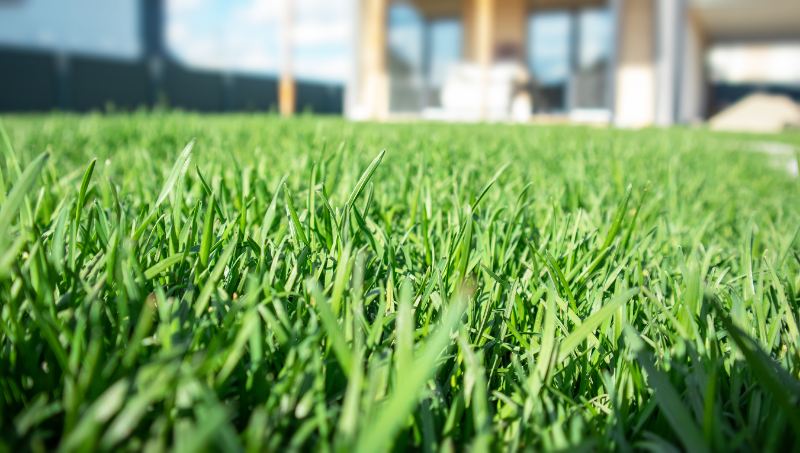
Grass that leans consistently in one direction creates an uneven mowing surface. Mower blades can’t make full contact with every blade uniformly. Some get cut, and some get missed, leaving inconsistent heights across the lawn.
Alternating direction each mow keeps the grass blades upright, ensuring consistent contact and producing a cleaner, more even cut across the entire lawn.
4. Reduces soil compaction
Dr. Doug Karcher, chair of the Horticulture and Crop Science Department at The Ohio State University, warns that “the main practical downside of always mowing the exact same path is potential compaction from the mower wheels tracking the exact same surfaces, over time.”
Over time, that repeated pressure compacts the soil along those tracks. Soil compaction restricts root growth, limits nutrient absorption, and reduces water infiltration. All of which produce weaker, thinner grass.
Aerating your lawn can fix soil compaction after the fact, but varying mowing direction helps prevent it in the first place.
To help prevent ruts and compaction on perimeter passes where you can’t vary the wheel path, Karcher says, “there’s not a lot you can do about that beyond occasionally skipping the perimeter pass, especially when the soil is wet, since that’s when it’s most prone to compaction.”
5. Reduces wear and tear on grass plants
Mowing the same path repeatedly also physically stresses your grass. Each time you turn, the mower’s tires tug at the plants, which can sever stems or uproot them entirely. Over time, those repeated turning spots develop bare or thinning patches that are prone to weeds and diseases.
Varying the direction each mow means turns occur in different spots, distributing mechanical stress across the lawn.
6. Prevents scalping
Mowing in the same direction each week means the mower approaches uneven areas from the same angle every time. You’ll repeatedly scalp the same high spots, exposing the soil. These areas of your lawn weaken over time and struggle to recover.
Changing direction means the mower approaches from a different angle each mow, giving stressed areas a chance to recover before they’re hit again.
7. Promotes healthy grass growth
Grass tends to grow in the direction it’s mowed. When that direction never changes, the blades lean rather than grow upright. Upright grass develops deeper roots, spreads more easily, and builds a thick, dense lawn that crowds out weeds and holds up better in heat and drought.
Changing direction regularly results in a healthier, fuller lawn over time.
FAQs
Having 4 directions in rotation gives the best results: north–south, east–west, northwest–southeast, and northeast–southwest. Cycle through one per mow on a 4-week loop. At a minimum, alternate perpendicular mowing directions to avoid soil compaction and grain.
Neither is universally better. What matters is alternating between them. But situational factors do apply:
Slopes: Riding mowers should mow up and down the slope; push mowers should go across. Or you can mow slopes on a slight diagonal, alternating each time.
Long, narrow yards: Mow parallel to the long axis (vertically along the property), then switch to horizontal the next mow.
Aesthetics: Stripes look most dramatic running along the longer dimension of the yard than the shorter side.
Stripes aren’t paint. They’re light reflecting off grass blades bent in opposite directions due to alternating passes in the same mow. Blades bent away from you reflect more sunlight and look brighter; blades bent toward you reflect less and look darker.
Striping is different from grain, which develops when grass is mowed in the same direction week after week, and the blades permanently lean one way.
Mid-morning (8–10 a.m.) is the best time to mow. The grass has dried from morning dew but isn’t yet stressed by midday heat. Mowing in the late afternoon from 4-6 p.m. is the second-best time.
Avoid mowing in the evening (6-8 p.m.). Dew forming on freshly cut grass makes it more vulnerable to fungal disease.
Not sure which direction to turn? Hire a pro
Getting the mowing right takes the right equipment, the right height for your grass type, and someone tracking the pattern every week. Hand it off to a local Lawn Love pro and spend your weekends enjoying your lawn instead of managing it.
Get a free estimate near you →
Main Image: An overhead view of a lush, freshly mowed green lawn with subtle mowing stripes. Photo Credit: Cherkas / Adobe Stock
Related Posts:


