| Key Takeaways |
|---|
| Apply spring pre-emergent when soil hits 50 to 55 degrees for 3-5 days straight. Apply fall pre-emergent when soil drops to 70 degrees to stop winter weeds. Treat before weeds sprout, as pre-emergents won't kill existing weeds. Measure your lawn and calibrate your spreader to avoid gaps. Water in granular products within 24 hours with 0.5 inches of water. Check residual lengths for the longest protection. Make sure your soil conditions are right before applying. |

You applied pre-emergent in spring, but crabgrass still took over your lawn. Before you assume the product failed, understand this: Pre-emergent herbicides prevent weeds through precise timing and application—and most failures stem from correctable mistakes.
One of the most common reasons is applying pre-emergent too late, after weeds have already germinated. But there are other reasons why it didn’t work—everything from not using enough product to not watering it in to applying it at the wrong soil temperature.
This guide identifies the 7 application mistakes that prevent pre-emergents from working and gives you actionable fixes for each.
Tired of weeds popping up all over your lawn? Lawn Love’s lawn care pros time pre-emergent applications perfectly and guarantee weed prevention.
- Problem #1: Applied after weeds already germinated
- Problem #2: Applied at the wrong soil temperature
- Problem #3: Insufficient product coverage or rate
- Problem #4: Broke the herbicide barrier
- Problem #5: Didn’t water it in
- Problem #6: Product residual doesn’t match growing season
- Problem #7: Soil conditions degraded the barrier
- Quick diagnostic checklist
- FAQ on pre-emergent herbicides
Problem #1: Applied after weeds already germinated

The issue: Pre-emergent herbicides create a chemical barrier in the top 1-2 inches of soil that kills weed seedlings as they sprout. Once weeds emerge above the soil surface, pre-emergent does nothing. Pre-emergent must go down 2-4 weeks before germination begins. You’ve waited too long if you see tiny crabgrass seedlings with one to two leaves, green fuzz in bare spots, poa annua forming small clumps, or chickweed spreading across bare spots.
The fix:
- Use soil thermometers, not air temperature—check soil at 2-inch depth
- Set calendar reminders based on your region’s soil temp patterns
- If you missed spring: Apply a second application 8-10 weeks after first (split applications extend control)
- If weeds already emerged: Apply a post-emergent herbicide, then apply pre-emergent next season
Regional timing guide:
- South (zones 8-10): Mid-February to early March
- Transition (zones 6-7): Late March to mid-April
- North (zones 3-5): Mid-April to early May
Problem #2: Applied at the wrong soil temperature
The issue: Pre-emergent only works when the soil temperature stays in the right range. Too cold, and the barrier doesn’t form properly. Too hot, and weeds have already started germinating. Temperature fluctuations can trigger early germination before your barrier is established. The soil temperature should be 50-55°F and rising when you apply pre-emergent.
Another common mistake is using air temperature instead of soil temperature. Just because it’s 70 degrees outside doesn’t mean your soil is warm enough. You might also apply way too early, thinking you’re being safe.
The fix:
- Buy a soil thermometer ($10-$15)—check temps at 2-inch depth at 8 a.m.
- Wait for 3-5 consecutive days of 50-55°F soil temps
- Check 7-day forecast for cold snaps after application
- If soil temps drop below 45°F for extended periods after application, barrier effectiveness decreases
Problem #3: Insufficient product coverage or rate
The issue: Pre-emergent must cover every square foot of soil to create a barrier against common lawn weeds. Gaps, thin spots, or under-application create breakthrough zones where weeds pop up.
Coverage fails when you estimate lawn size instead of measuring; use old spreaders with inconsistent distribution; don’t overlap passes; rush application in windy conditions where product drifts off target; use “close enough” settings instead of following the label; fail to calibrate your spreader for different product brands; or stretch product to save money by applying less than needed.
The fix:
- Measure your lawn precisely: Use Google Maps or a measuring wheel
- Calculate product needed: A typical bag covers 5,000-15,000 square feet at proper rate
- Calibrate your spreader: Apply test strip, measure how much area one pass covers
- Use striping pattern: Alternate directions (north-south, then east-west) for complete coverage
- Apply in calm conditions: Wind under 10 mph to prevent drift
- Water in within 24 hours: Activates barrier and moves product into soil
My Tip: After application, you should see light, even granule coverage across the entire lawn.
Read more:
Problem #4: Broke the herbicide barrier
The issue: Pre-emergent forms a thin barrier in the top 1 to 2 inches of soil that stops weed seeds from growing. Any activity that disturbs this layer creates gaps where weeds can germinate.
Activities that break the barrier:
- Core aeration: Pulls up soil cores, creating thousands of breakthrough points
- Power raking/dethatching: Disrupts soil surface
- New plantings: Digging holes for flowers, shrubs
- Heavy foot traffic: On wet soil, especially during sports or play
- Raking leaves aggressively: If done on bare spots
The fix:
- Aerate in fall only (September-October) after summer weeds are done germinating
- If you must aerate in spring: Do it first, then apply pre-emergent immediately after (within 48 hours)
- Avoid new plantings for 6-8 weeks after pre-emergent application in treated areas
- Mark treated areas: If doing landscaping work, avoid pre-emergent zones or reapply after soil disturbance
- Minimize traffic on wet soil: Creates ruts that break the barrier
Read more:
Problem #5: Didn’t water it in
The issue: Granular pre-emergent herbicides sit on grass blades until water moves them into the soil, where they create a barrier against weeds. Without rain or irrigation, the product can’t activate and form the protective barrier. At least 0.5 inches of water is necessary to move the product into the top inch of soil.
Watering in means giving the lawn a light watering of 0.25 to 0.5 inches to wash the granules off the grass and into the top layer of soil. For best results, water within 24 to 48 hours of application (watering within 7 days still works, but the barrier weakens between days 4 and 14; after 14 days without water most of the product stops working).
The fix:
- Check 7-day forecast before applying: You need rain or ability to irrigate
- If no rain predicted: Water lightly (15-20 minutes per zone) within 24 hours
- If you forgot to water: Do it as soon as you remember, even 10 days later (some effectiveness remains)
- Liquid pre-emergents: Don’t require watering in—they’re already in solution
Problem #6: Product residual doesn’t match growing season
The issue: Pre-emergent herbicides have different “residual lengths”—how long they remain active in soil. If your product only lasts 8-10 weeks but your weed germination season runs 16 weeks, you’ll get breakthrough weeds in mid-summer.
Residual length by active ingredient:
- Short residual (8-12 weeks): Benefin, DCPA (Dacthal)
- Medium residual (12-16 weeks): Pendimethalin (common in big-box stores)
- Long residual (16-20+ weeks): Prodiamine, dithiopyr
The fix:
- Use prodiamine-based products for longest control (Barricade, Quali-Pro Prodiamine)
- Split applications: Apply half-rate in early spring, half-rate 8-10 weeks later
- Read labels carefully: Look for “residual control” or “duration” information
- For year-round weed control: Apply fall pre-emergent (August-September) for winter weeds, spring pre-emergent (March-April) for summer weeds
Regional considerations:
- Southern lawns: Need longest residual products (crabgrass germinates March-September)
- Northern lawns: Can use medium residual (germination window April-July)
Problem #7: Soil conditions degraded the barrier

The issue: To work, pre-emergent herbicides must bind to soil particles to form a barrier against weeds. But different soil types and soil conditions can change how well it works.
A thick layer of thatch or high organic matter keeps the herbicide from reaching the soil. Sandy soils don’t hold the herbicide well, and it washes away quickly. Soils with high pH (over 7.5) can make some herbicides break down faster. Overly wet soil makes the herbicide move too deep (below the germination zone)..
The fix:
- Dethatch if layer exceeds 0.5 inches before pre-emergent application
- Sandy soils: Use higher label rates and consider split applications 6-8 weeks apart
- Clay soils: Standard rates work well (good particle binding)
- After heavy rain (2+ inches): Reapply if it occurred within 2 weeks of original application
- Get soil test: Knowing pH helps select most stable pre-emergent for your conditions
- Avoid low-lying areas: Where water pools, pre-emergent washes away or moves too deep
Read more:
Quick diagnostic checklist
Before reapplying next season, verify:
- Soil temperature has reached 50 to 55 degrees for spring weeds or dropped to 70 degrees for fall weeds
- Soil temps have stayed consistent for three to 5 days straight
- You’re applying 2-4 weeks before weeds typically start germinating in your area
- You’ve measured your lawn size accurately (not estimated) and figured out how much pre-emergent you need
- Wind conditions are calm (under 10 mph)
- Rain or irrigation is available within 24 hours after application
- You haven’t recently aerated, dethatched, or disturbed the soil (and don’t plan to for 6-8 weeks)
- Thatch layer is under 0.5 inches
- Soil isn’t soaked or waterlogged
- Product residual length matches your weed season (at least 3-4 months)
- You have enough product to cover your entire lawn at full label rate (don’t skimp and use less)
All boxes checked but still got breakthrough weeds? You may need split applications or professional-grade products.
FAQ on pre-emergent herbicides
It lasts 2-5 months, depending on which product you use and how much you apply. Pendimethalin works for 2-5 months. Prodiamine products last the longest in your soil generally 4-5 months. Check your product label to see exactly how long it lasts.
No. Wait 8-16 weeks after applying before planting new grass seed. Most pre-emergents stop all seeds from growing, including grass seed. Check your product label for the exact waiting time. Siduron is one pre-emergent that allows grass seed to grow while blocking certain weeds, but it works differently and has limitations.
Yes. Split applications (half-rate in early spring, half-rate 8-10 weeks later) provide season-long control and are often more effective than a single full-rate application.
Fix pre-emergent problems for good
Pre-emergent herbicide failure almost always goes back to timing, application technique, or product selection. Soil temperature, proper coverage, watering in, avoiding soil disturbance, and matching residual length to your growing season determine success. Use the diagnostic checklist to identify what went wrong.
If you’ve corrected all application errors and still experience breakthrough weeds, consider hiring a pro to help. Let Lawn Love connect you with a local pro who can handle timing, apply at the right rates, and guarantee weed prevention. Get your free quote today for season-long protection.
Read more
- How to Apply Pre-Emergent Herbicides
- Types of Pre-Emergent Herbicides
- When to Apply Post-Emergent Herbicide
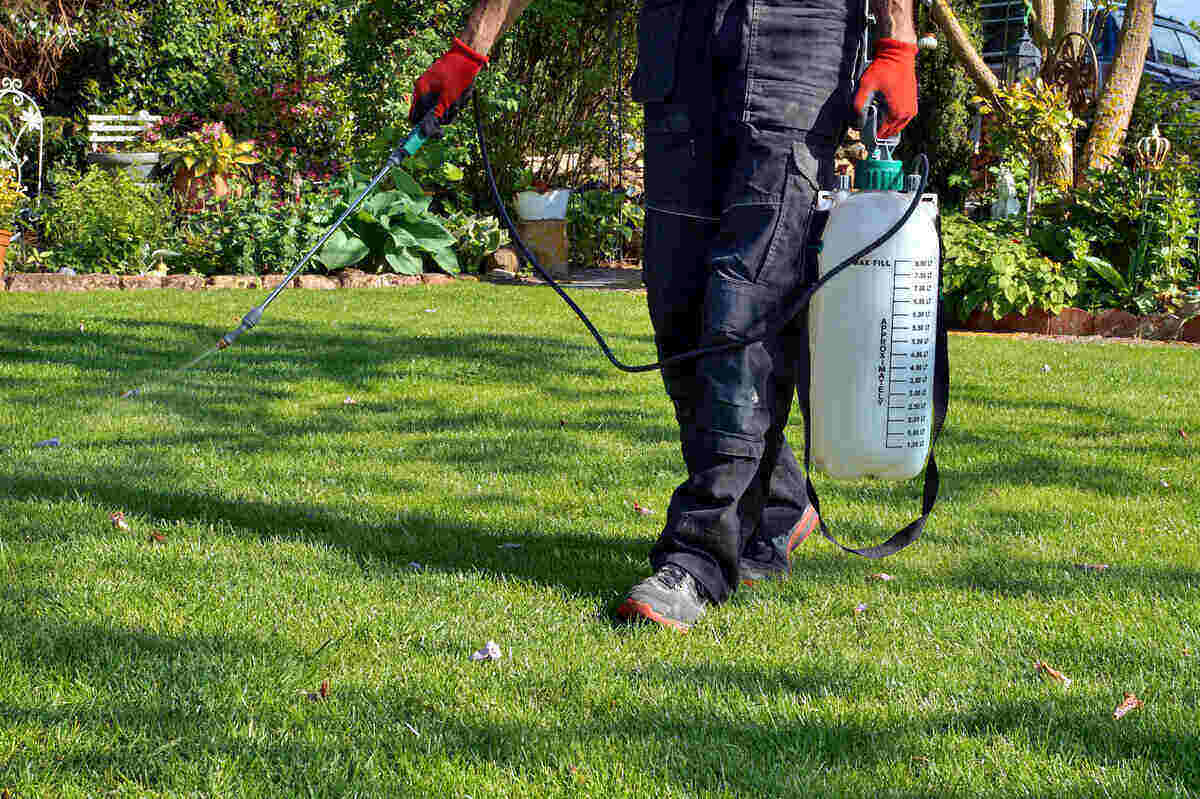
Main Image: Pre-emergent herbicide on lawn. Photo Credit: Stock Photo Zone / Adobe Stock
Related Posts: