| Key Takeaways |
|---|
| • Raise your mower height: taller grass shades the soil, holds moisture, and crowds out weeds. • Water deeply and infrequently: 1–1.5 inches per week in 1–2 thorough sessions • Fertilize warm-season grass in early and late summer. Skip it on cool-season grass until fall. |
Summer is the hardest season for a lawn. Between heat, drought, and foot traffic, your grass faces more stress from June through September than any other season, and the wrong care habits can cause more damage than the weather itself.
This guide covers summer lawn maintenance in priority order: what to do, when to do it, and what to avoid.
If you’d rather hand off the hardest parts, local lawn care professionals can handle mowing, fertilizing, and weed control all summer long.
Mow high

Raise your mowing height in summer. Taller grass shades the soil, slows evaporation, grows deeper roots, and outcompetes weeds.
- Follow the one-third rule: never remove more than a third of the blade in one pass. SD State Extension recommends mowing before the lawn reaches 4.5 inches if your blade is set to 3 inches.
- If you miss a mow and the grass gets too tall, raise the blade a notch or two to avoid scalping, then phase back over 2 or 3 cuts.
- In peak heat, delay mowing when possible. Every pass stresses the plant when the soil moisture is low.
- Leave clippings on the lawn. They return nutrients and moisture to the soil without building thatch.
- Keep blades sharp. Chuck Vogt, owner of Metro Lawns in Atlanta, says a dull blade “rips the grass and looks ragged. That can be a problem, especially during the warm seasons, when that can place the turf under stress.”
- Mow on a regular schedule. “Some folks figure, well, I’ll just wait for three weeks or longer, and then they cut it really low, and that invites disease, because the grass is stressed out,” Vogt says.
Here’s a quick reference of summer mowing heights for the most common grass types:
Cool-season grasses
| Grass Type | Summer Height | Mow When It Reaches |
| Tall fescue | 3-4 inches | 4-5.25 inches |
| Kentucky bluegrass | 2.5-3.5 inches | 3.25-4.5 inches |
| Perennial ryegrass | 2–2.5 inches | 2.5-3.25 inches |
| Fine fescue | 2.5-4 inches | 3.25-5.25 inches |
Warm-season grasses
| Grass Type | Summer Height | Mow When It Reaches |
| St. Augustinegrass | 3–4 inches | 4-5.25 inches |
| Bermudagrass | 1-2 inches | 1.25-2.5 inches |
| Zoysiagrass | 1.5–2 inches | 2-2.5 inches |
| Bahiagrass | 3-4 inches | 4-5.25 inches |
| Centipedegrass | 1.5–2 inches | 2-2.5 inches |
| Buffalograss | 2.5–3 inches | 3.25-4 inches |
Read more:
Water properly

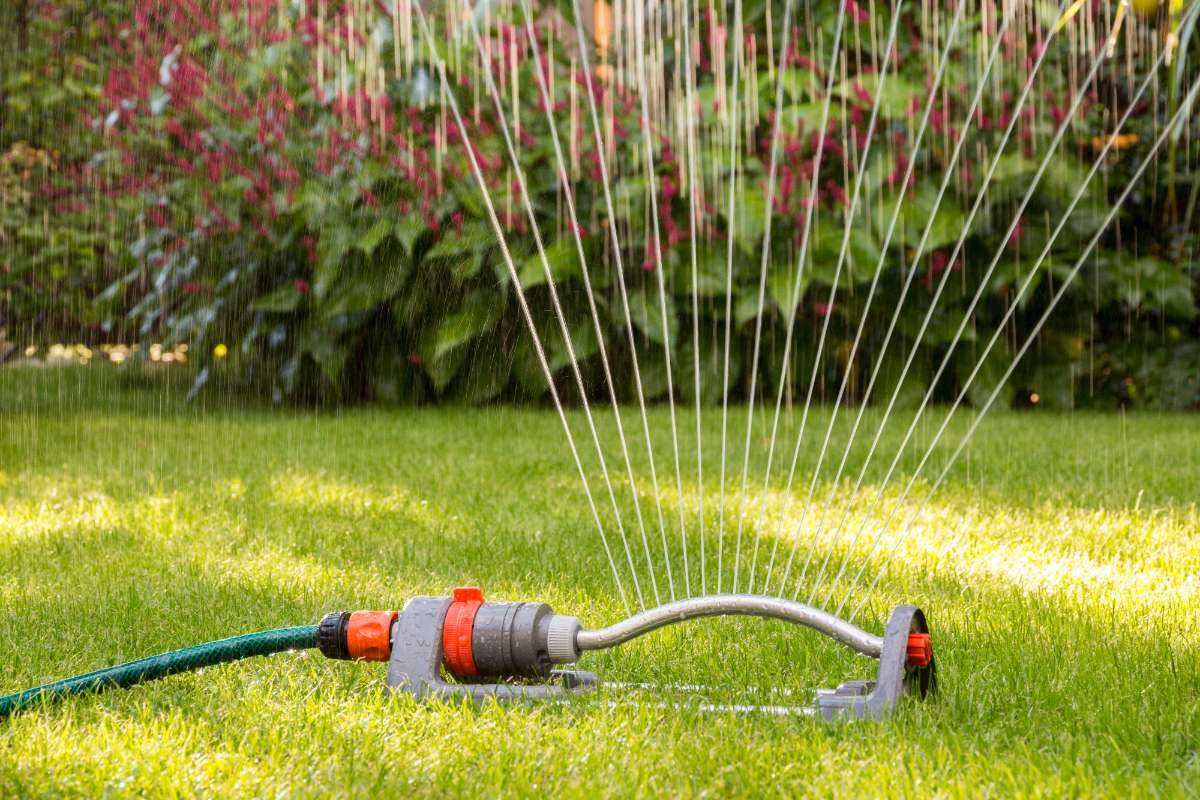
Your lawn needs 1 to 1.5 inches of water per week, including rainfall.Purdue University Extension recommends one thorough soaking or two equal applications 3 to 4 days apart, wetting the soil to root depth rather than just the surface.
- Water early morning, between 4 and 9 a.m. Evaporation is minimal, and the grass dries before nightfall. Wet grass overnight promotes fungal disease.
- Water deeply, not daily. “Lawns technically only need watering 2 to 3 times a week, even in the summer,” says Scott Culala, owner of The Lawn Cypress in Gardner, Kansas. Daily light watering keeps roots shallow.
- Track rainfall with the tuna can test. “Take an empty tuna fish can, and place it out on the lawn. And if that fills up, in a week, you’ve had an inch of rain,” Vogt says.
- To check sprinkler coverage, run the system for 15 minutes with the can in range, then measure. Most setups need 30 minutes to 2 hours per session to deliver 1 inch, depending on your sprinkler’s output.
- Match frequency to your soil type. Sandy soil drains fast and may need water slightly more often. Clay soil is prone to runoff if you apply too much at once
- Don’t panic if your lawn goes dormant. Grass survives 4 to 6 weeks of dormancy without permanent thinning, according to Purdue Extension. Water dormant turf with 1 to 1.5 inches every 4 to 6 weeks to keep crowns and roots alive.
Read more:
- When is the Best Time to Water Your Lawn in Hot Weather?
- 7 Lawn Watering Mistakes That Are Killing Your Grass (and Wasting Money)
Control weeds
Thin, stressed turf opens the door to weeds. Dense, properly mowed and watered grass closes the canopy and leaves little room for them to establish.
Common summer weeds:
- Crabgrass is a coarse annual that thrives in bare or thin patches and produces seed heads in late summer.
- Nutsedge looks like turf but grows faster, with triangular stems and bright green blades in sets of three.
- Ground ivy (creeping Charlie) is a creeping perennial with scalloped leaves and small purple flowers. It spreads fast in shaded or moist spots.
How to control them:
- Hand-pull small infestations, removing the full root before weeds set seed.
- Post-emergent herbicides target existing weeds. Apply below 85 degrees. SD State Extension notes many labels prohibit application above that threshold to avoid injuring the lawn.
- Pre-emergent herbicides prevent crabgrass and annuals, but must go down in spring. Summer is too late for pre-emergent herbicides to work.
- Natural options like horticultural vinegar work in beds and hardscapes, but not on turf.
Avoid weed-and-feed combos in summer. The combined stress of herbicides and fertilizers in peak heat can damage healthy grass. For warm-season grasses that need summer feeding, use stand-alone fertilizer and spot-treat weeds separately.
Read more:
Manage pests and diseases
Summer stress leaves lawns vulnerable to insects and fungal diseases. Symptoms often look similar, so identify before you treat.
Common summer pests:
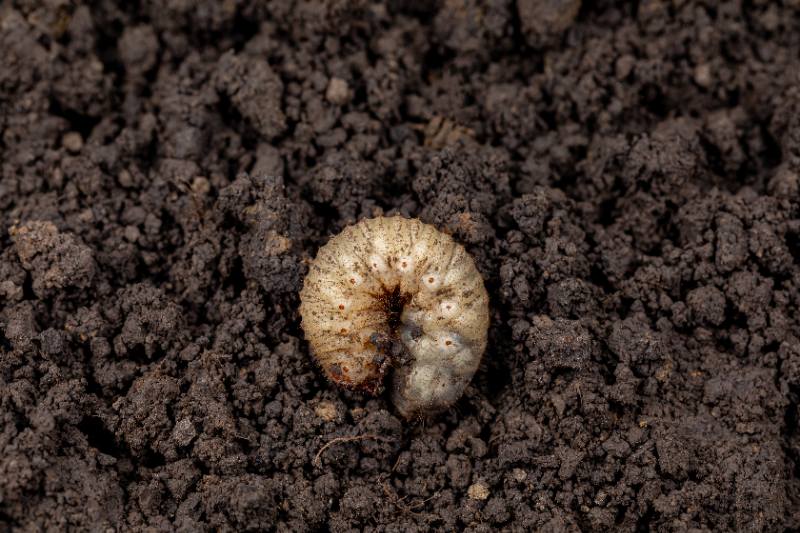
- Grubs are C-shaped larvae feeding on roots underground. Patches feel spongy and peel back like a rug.
- Chinch bugs hit St. Augustinegrass hardest, creating yellowing patches in full sun during dry spells.
- Sod webworms chew grass blades at the soil surface. Small moths flush out as you walk or mow.
Common summer diseases:
- Brown patch forms circular brown patches with a darker border, triggered by heat and humidity.
- Dollar spot creates straw-colored patches 2–3 inches wide with tan lesions on individual blades.
- Pythium blight expands fast in hot, wet weather. Patches look greasy and brown, sometimes with cottony growth in the early morning.
The prevention is the same for both. Remove excess thatch, avoid overwatering, and improve airflow by trimming nearby trees and shrubs. Use pest-specific products for insects and a targeted fungicide for disease, rotating types to prevent resistance.
Read more: Signs of Lawn Pest Damage vs. Disease vs. Drought Stress
Remove excess thatch
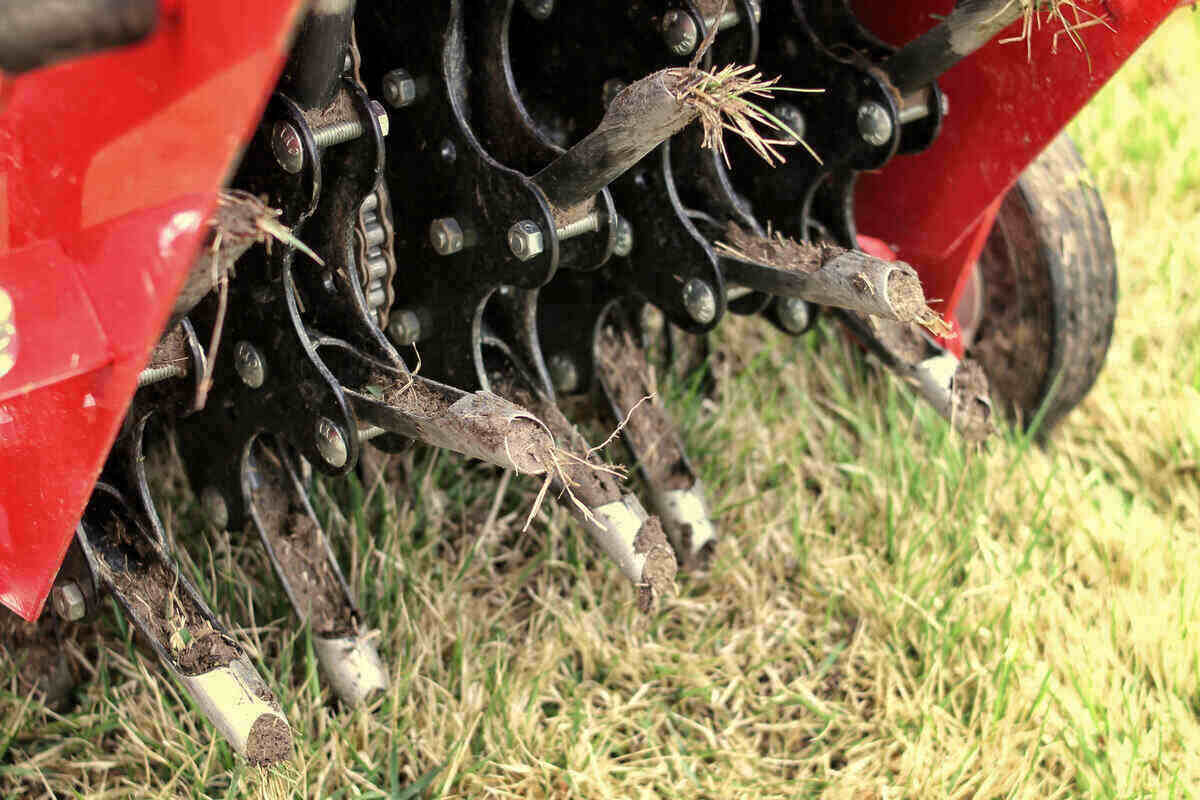
Thatch is a layer of undecomposed roots, leaves, and plant debris that builds up between the grass and the soil. If it exceeds half an inch, it blocks air, water, and nutrients from reaching the roots, and it’s time to dethatch your lawn.
When to dethatch:
- Warm-season grass: early to midsummer, during active growth
- Cool-season grass: late summer to early fall
Mow slightly lower beforehand and water lightly the day before. Afterward, rake up debris, then water and fertilize to help the lawn recover. Professional dethatching costs $65 to $160 on average, depending on lawn size.
Read more: Benefits of Dethatching Your Lawn
Fertilize warm-season grass

Feed warm-season grasses in early summer and again in late summer. Skip fertilizing cool-season grasses until fall. Feeding them in the summer heat wastes product and risks burning your lawn. If you fertilize warm-season grass, slow-release organic fertilizer is the safer choice in the heat.
Slow-release vs. quick-release:
- Slow-release has a lower burn risk, releases nutrients gradually, and costs more. It’s the safer choice for summer applications.
- Quick-release acts fast and costs less, but carries a higher burn risk in heat.
Organic vs. synthetic:
- Organic fertilizer releases slowly and steadily, improves soil health over time, has a very low burn risk, and costs more.
- Synthetic fertilizer acts fast and costs less, but has a higher burn risk and can degrade soil health long-term.
Water lightly after applying. Don’t fertilize if no rain is expected within 24 hours.
Read more: How to Fertilize Your Lawn
Test your soil
A lawn soil test shows your pH and nutrient levels before you spend money on fertilizer or amendments. Test every 2 to 3 years. Most grasses grow best at pH 6.0–7.0.
Add lime to raise pH, sulfur to lower it. The test also shows nitrogen, phosphorus, and potassium levels, so you know what’s actually deficient.
Use a garden center kit for a quick read, or send samples to your county extension lab for more detail.
Read more: How to Read a Soil Test Report
FAQs
Mowing height. Raising the blade by half an inch shades the soil, retains moisture, and reduces weed pressure at no extra cost.
No. Warm-season grasses like Bermuda, Zoysia, and St. Augustine are in peak growth. Mow, fertilize, and maintain actively. Cool-season grasses like fescue, bluegrass, and ryegrass go semi-dormant in heat. Don’t fertilize, mow high, and water lightly to keep the crowns alive until fall.
Warm-season grasses can be overseeded in spring through early summer at soil temperatures of 80 to 95 degrees. Cool-season overseeding should wait until late summer to early fall when soil temps drop to 50 to 65 degrees. Grass seeded at the wrong temperature won’t germinate.
Hire a local lawn care pro
Getting summer lawn maintenance right takes the right timing, the right products, and consistent attention through the hottest weeks of the year. That’s time you may not always have. If you’d rather leave it to someone who does this every day, Lawn Love can connect you with local lawn care professionals who can handle mowing, fertilizing, and more on a schedule that fits your lawn care needs.
Read more:
- How to Mow Around Trees, Flower Beds, and Landscaping
- Why Your Mowing Pattern Matters Before Grass Goes Dormant
- Does ‘No Mow May’ Really Help Pollinators?
Main Image: Sprinkler watering green lawn in sunny garden. Image Credit: VanderWolf Images / Adobe Stock
Related Posts: