| Key takeaways |
|---|
| ● Cool-season grasses: topdress in early fall, while the soil is still warm. ● Warm-season grasses: topdress in late spring to early summer, once fully green. ● Full-lawn topdressing: once every few years is enough for most established lawns; bare patches can be done anytime during the active growing season. |
Wondering when to topdress a lawn for the best results? Timing your topdressing completely depends on your grass type: fall for cool-season lawns, late spring to early summer for warm-season lawns.
In both cases, your grass must be actively growing. You never want to topdress a dormant or heat-stressed yard. The grass has to grow through the new dirt quickly rather than sit beneath it.
Not sure your timing is right? Lawn Love’s local aeration and topdressing pros can handle the whole job for you, on schedule.
Best time to topdress cool-season lawns
- Best window: Early fall
- Backup window: Spring
- Avoid: Summer heat, winter dormancy
If you have a cool-season grass type, like tall fescue, Kentucky bluegrass, or perennial ryegrass, early fall is your window.
Cool-season grasses naturally shift into a second growth spurt as temperatures drop from summer highs, and the soil is still warm enough from summer to support fast root and microbial activity.
Taylor Olberding, franchise owner at Heroes Lawn Care in Omaha, Nebraska, says timing topdressing with grass growth is important.
“For cool-season grass like fescue, I like to do it in early fall when the grass is growing again and weather is somewhere around 60 to 70 degrees,” Olberding says. “I’d rather do it while they’ve still got several weeks of good growing weather ahead of them so the grass has enough time to grow through the topdressing.”
Reed Santee, vice president at Central Home Supply in Scotts Valley, California, says he pays attention to weed growth.
“Time your topdressing right after summer weed seeds go dormant, but while daytime soil temperatures remain warm enough to support rapid germination.”
Fall is also the perfect time to overseed. Topdressing and seeding at the same time are highly efficient because the material holds the new seed in place against the soil.
Spring is a workable backup option if you completely missed the fall window. But you will be racing the clock before the summer heat hits, and your soil has not had a full season to recover from the winter freeze.
Best time to topdress warm-season lawns
- Best window: Late spring–early summer
- Backup window: Unlike cool-season grass, warm-season turf has no safe second chance. You can still topdress into mid or even late summer in most areas, as long as the grass is green and growing fast.
- Avoid: Before full green-up, winter dormancy.
For warm-season grass types like Bermudagrass, Zoysiagrass, centipedegrass, and St. Augustinegrass, you have to be patient. Wait until the lawn has fully broken winter dormancy and is pushing peak growth. That usually happens in late spring into early summer.
Topdressing too early, while the grass is still transitioning out of dormancy, means the material sits on a lawn that isn’t growing fast enough to push through it.
How do you know it is safe?
“Wait until you have had to actively mow the lawn twice in the spring, which proves the root system is vigorously pushing new growth,” Santee says.
Once your warm-season lawn is completely green and actively growing, it has the vigor to recover fast and incorporate the topdressing material within a few mowing cycles.
Signs your lawn needs topdressing now
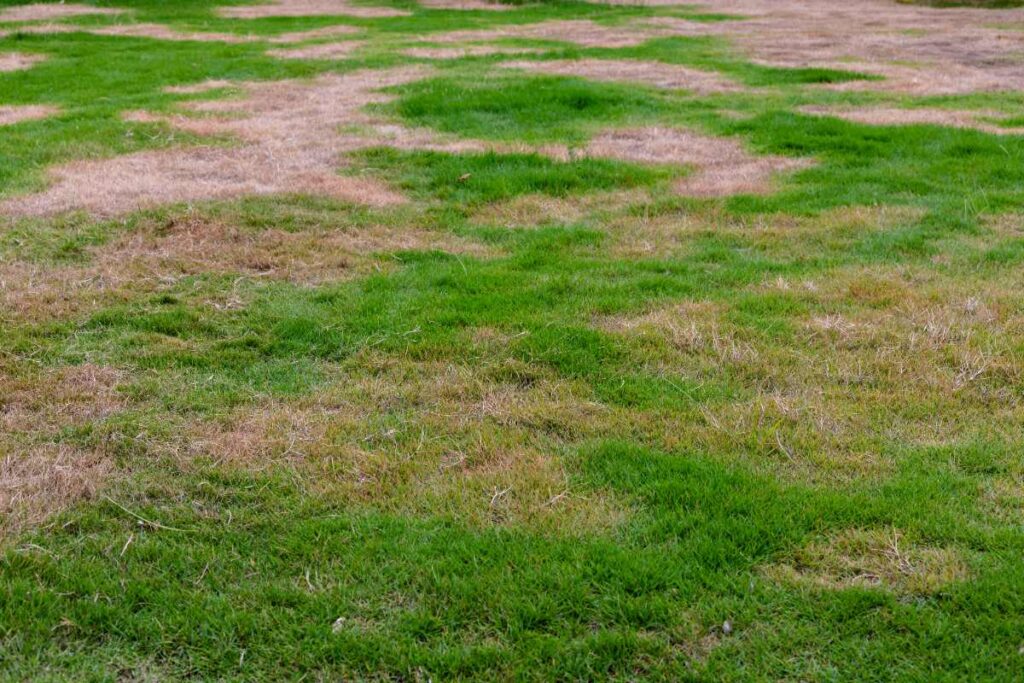
The calendar tells you the best season, but your yard tells you if it actually needs the work.
Tammy Sons, founder and CEO at Tennessee Wholesale Nursery in Altamont, Tennessee, says the signs are entirely physical.
“The best sign that your lawn needs topdressing isn’t missing fertilizer but a lumpy, compacted texture that leaves puddles in some areas and water streaming away in others,” Sons says. “Such symptoms call for a change in the physical structure of the soil, not simply another dose of fertilizer.”
Other red flags include:
- Consistent disease outbreaks
- Yellowing grass despite regular care
- Grass that stays wet and squishy long after watering
- Persistent weeds in the same areas
- Bald or thinning patches
- Visible unevenness or low spots
Santee points out a much less obvious clue.
“The most overlooked sign a lawn needs topdressing is subtle micro-erosion where watering creates tiny ditches and exposes shallow roots,” he says.
If you’re only fixing bare patches rather than the whole yard, you may have more flexibility. You can patch topdress at any time during the active growing season.
How often should you topdress a lawn?
For most established lawns, topdressing once a year (in fall for cool-season grass or late spring for warm-season grass) is the recommendation from extension turf specialists.
Clemson Cooperative Extension advises that “topdressing applications should be light and frequent, allowing for incremental changes to the soil profile over time,” rather than doing occasional heavy sessions.
Olberding is against making this a yearly habit.
“Too much material, especially if it doesn’t match the existing soil, can create layers that hold water differently and cause drainage or root problems,” he explains.
“Topdressing every single year can overload the lawn with excess organic matter, shifting soil pH and trapping stagnant surface water directly around the plant crown,” Santee adds.
The exception is a lawn actively being rebuilt from bare soil or severe compaction. Light annual applications for 2 to 3 consecutive years are acceptable because you’re not raising the grade of the entire yard.
When you do apply it, keep it thin.
“Spread a strict 1/8 to 1/4 inch layer of a screened product,” Santee says. “It quickly settles straight into the root crown without smothering growing turf.”
Topdressing and overseeding timing
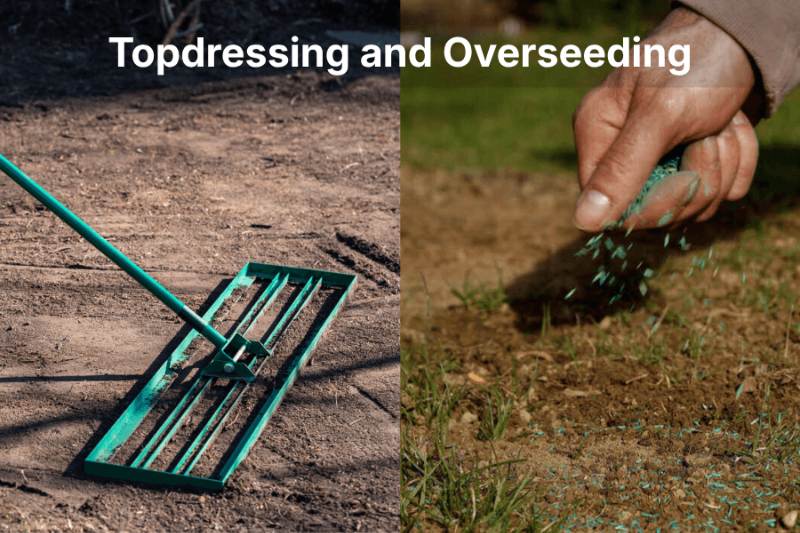
Topdressing and overseeding go hand in hand, and timing one around the other matters. Overseed first, then topdress:
- Cool-season lawns: Overseed and topdress together in early fall. The warm soil speeds germination, and the topdressing material keeps the seed in contact with the ground.
- Warm-season lawns: Overseed and topdress together in late spring, once the lawn is fully green, giving new seed a full growing season to establish before winter dormancy.
If you’re topdressing to fix a low spot, you need the right technique. Santee explains his method perfectly.
“For low spots, I feather material from the center outward with a landscape rake or leveling lute, leaving grass blade tips visible,” Santee says. “Afterward, water gently right away, keep the surface evenly damp with short cycles until seed is up and the dressing settles.”
Choosing the right material makes a big difference. Santee uses a specific mix for his residential clients.
“My go-to for home lawns is our topsoil blend: sandy loam, aged pellet-fed horse manure, aged mushroom compost, and forest humus,” he explains. “It gives you mineral structure plus organics. I only lean sandier when the goal is drainage or firm leveling.”
What happens if you topdress at the wrong time
Topdressing outside the active growing window can actively hurt your lawn:
- Summer heat: “During a summer heatwave, topdressing can heat-stress the crown, block airflow, and make watering harder to manage,” Santee says. “You’ll often see yellowing, thinning, or dead patches where material sat too deep.”
- Winter dormancy: Dormant grass isn’t growing, so it can’t push up through the topdressing layer. The material just sits on the surface, suffocating the yard until spring.
- Too early in warm-season green-up: Applying topdressing before warm-season grass is fully active can slow its emergence from dormancy.
In all three cases, the risk is the same: a layer of material sitting on top of grass that isn’t growing fast enough to incorporate it, which can smother or thin the turf rather than help it.
FAQs
Most lawns show improved drainage and water retention within a few weeks. The full soil-health benefits might take a few seasons to show up.
Only if your thatch layer exceeds ½ inch. What does change by grass type is timing. You should check our guide on how to dethatch your lawn for the right window for your grass type.
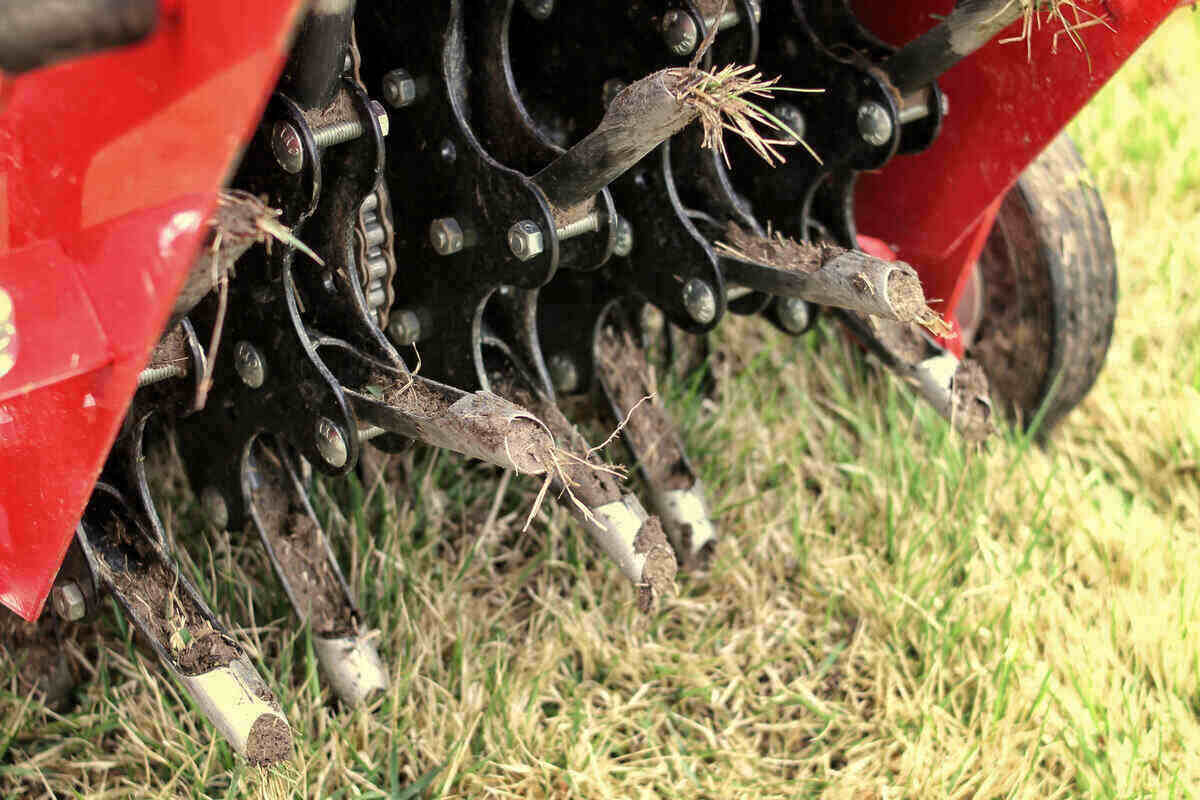
You can topdress immediately after aerating. In fact, it’s one of the most effective strategies you can use.
Santee prefers this exact combo. “I like core aeration first because the dressing gets keyed into the lawn like grout in joints, instead of forming a crust that sheds water or mats the canopy,” he says.
Skip the wheelbarrow work
Getting topdressing timing right takes some planning around your grass type and growing season.
If you want the benefits of a perfectly leveled, topdressed lawn without losing your entire weekend to manual labor, Lawn Love’s local pros know exactly when and how to topdress your specific grass type.
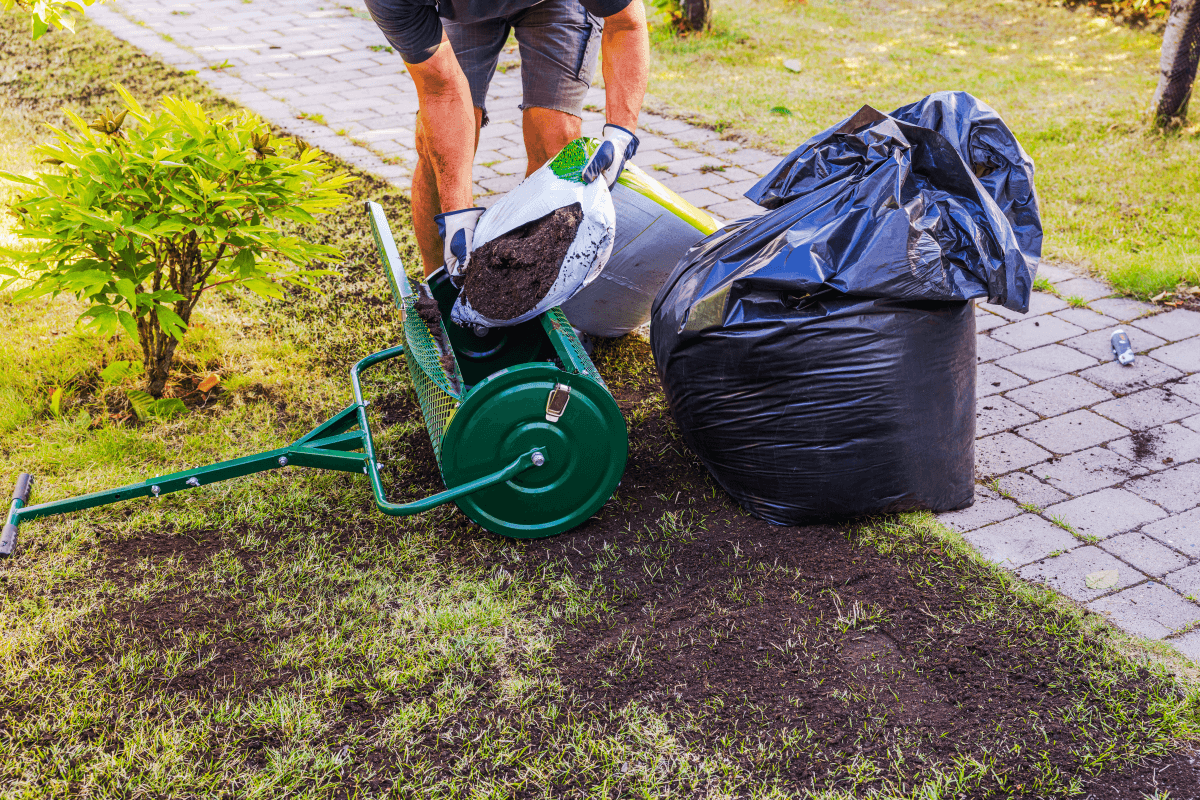
Main Image: Man loading a topdresser with soil for lawn restoration. Photo Credit: Alex / Adobe Stock
Related Posts: