| Key takeaways |
|---|
| ● Give birds good food: Black-oil sunflower and suet are reliable winter foods. Skip the bread. ● Keep shells off grass: Clean up beneath feeders throughout winter. ● Know the local advice: Check your state's current avian flu recommendations. |

You put up a bird feeder to watch the birds, not feed mice. Feeding birds in winter starts with suitable food, such as sunflower seed or suet, and a plan for what falls on the ground.
Choose food that leaves fewer shells behind, and put the feeder where you can clean underneath it. If you can’t easily reach the spilled seed, chances are the mice will get to it before you do.
If winter feeding leaves you with more yard work than you want in spring, Lawn Love’s local yard cleanup pros can handle the raking and cleanup once the snow is gone.
What to put out in winter
Staying warm takes energy. That’s why foods such as suet and black-oil sunflower seed are useful in winter: Their fat gives birds a concentrated source of energy when food may be harder to find.
“Birds need a lot of energy to make it through cold nights,” says Dana Sanchez, a wildlife specialist with Oregon State University Extension, in its winter bird-feeding guidance.
Do you have to feed them? UNH Extension describes feeders as a supplement to natural food, not something most songbirds depend on to survive winter.
Project FeederWatch, a joint project of the Cornell Lab of Ornithology and Birds Canada, recommends these foods for backyard birds:
| Food | Birds it can attract | What’s left to clean up? |
| Black-oil sunflower seed | Chickadees, finches, cardinals, and nuthatches | Shells and spilled seed |
| Sunflower hearts or chips | Many of the same sunflower-eating birds | No shells, but dropped seeds still need picking up |
| Suet | Woodpeckers, nuthatches, and chickadees | Crumbs or dropped pieces. No shells unless added ingredients contain them |
| Plain, unsalted peanuts | Jays, chickadees, nuthatches, and titmice | Shells if offered whole and dropped pieces if shelled |
| Nyjer seed | Goldfinches and pine siskins | Small hulls and spilled seed |
Birds leaving part of a seed mix behind? Try a smaller bag or a single seed they eat. FeederWatch notes that preferences for milo and oats vary by species. What goes uneaten in your yard becomes cleanup, not a bargain.
Ordinary suet can go rancid in warm weather. UNH Extension notes that specially made suet cakes can be used year-round. Check which kind you’re buying, follow the storage and feeding directions, and throw it away if it spoils.
What about bread? Save it for your own lunch. It’s a poor substitute for nutritious bird food.
Different feeders suit different birds:
- Tube feeders suit many smaller birds.
- Hopper feeders accommodate larger visitors.
- Platform feeders attract a wide range of birds. For less wet seed and waste, choose a covered, well-drained design and offer only what birds will eat that day.
Read more: Best Plants to Attract Birds to Your Yard
Where to place feeders
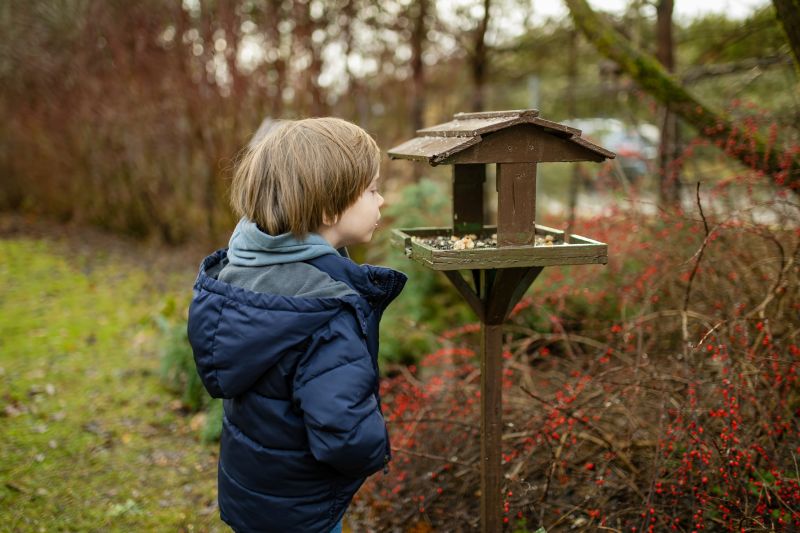
You’ll want the feeder somewhere you can see it. Watching the birds is why you’re doing this, after all.
Project FeederWatch suggests about 10 feet between feeders and cover. Nearby shrubs give birds shelter, but branches too close to the feeder can give squirrels a way across and cats somewhere to hide.
A baffle below a pole-mounted feeder can block climbing animals. Follow its installation instructions, and check nearby fences and railings for another way to reach the food.
For your lawn, the best spot is one you can clean easily. A patio gives you a firm surface to clean. Gravel or mulch keeps shells off the grass, but you’ll still need to pick seed out of it. Choose somewhere you can reach easily in winter.
Read more:
- How to Stop Squirrels from Digging in Your Yard
- How to Stop Animals from Digging in Your Yard
- How to Protect Your Lawn from Winter Damage
Seed mess and your lawn
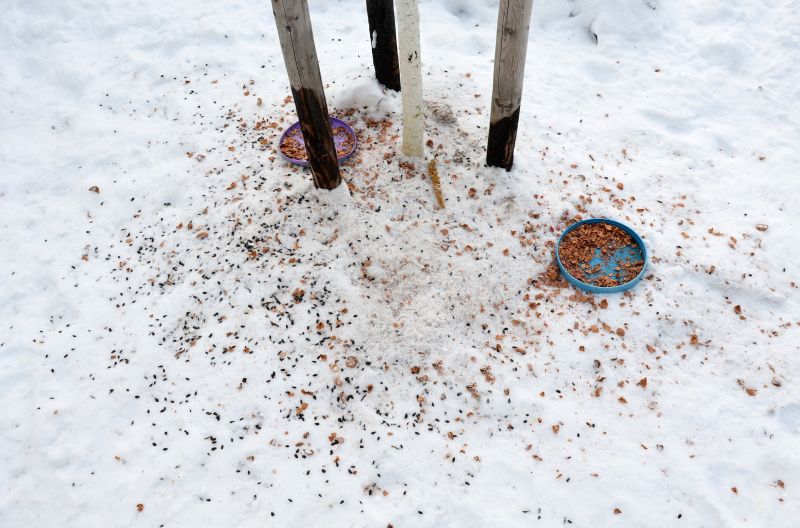
Your birds may be beautiful. Their table manners? Not so much.
Shells, discarded seed, and droppings collect beneath feeders. That debris can form a wet layer over the grass, and uneaten seed may sprout.
Here’s what to do:
- Check the ground when you refill: Pick up spilled food and hulls. If they’re sitting on snow, lift away the dirty top layer before another snowfall buries it. Don’t dig into the grass.
- Use shell-free seed where mess is a problem: Sunflower hearts eliminate sunflower shells, but spilled food still needs picking up.
- Keep portions small: Offer what birds will eat. Don’t top off old, damp seed.
- Use a removable catch tray: It can catch some spills, but needs drainage and cleaning.
- Clear the grass before spring growth: Once snow melts and the ground is firm, gently rake away remaining debris. Wait if the lawn is soggy or the grass is frozen.
Read more:
- Spring Lawn Care: 12 Essential Steps to Green Up Your Lawn
- How to Clean Up Wet Leaves: 4 Easy Methods
Signs that rodents are visiting
“One of the first things homeowners notice is the presence of mouse or rat droppings mixed into other debris while cleaning up,” says Allan Bossel, operations expert and licensed exterminator at Bed Bug Exterminator (BBE) in St. Petersburg, Florida.
“Other giveaway signs include the presence of burrows and runways, strong odors, and of course sightings of actual rats or mice, especially during the night.”
Check the feeder for damage, too. “Sometimes, rats and mice may chew around the parts of the bird feeder apparatus,” Bossel says.
Found rodent droppings among the shells? “If you recognize these droppings, stop working immediately and check if you’ve protected yourself enough, as rodent droppings can carry zoonotic diseases,” Bossel warns. Those are diseases that can spread from animals to people.
The CDC says not to sweep or vacuum droppings dry. Don’t rake them up with the shells, either. Wear rubber or plastic gloves and follow its wet-cleanup instructions for hard surfaces.
Rodent droppings in the grass? Leave the rake down and ask your local health department how to handle it. Don’t pour disinfectant over the lawn.
Read more:
- How to Get Rid of Voles in Your Yard
- How to Get Rid of Gophers in Your Yard
- How to Get Rid of Moles in Your Yard
- How to Get Rid of Groundhogs
- How to Get Rabbits Out of Your Yard
- How to Keep Raccoons Out of Your Yard
Keeping rodents away
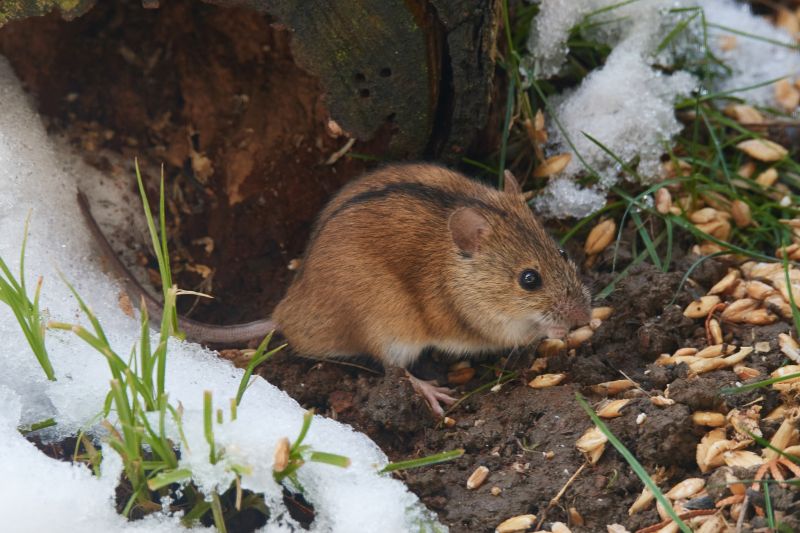
“To prevent a rodent problem around your bird feeder, the key is to keep access to birdseed to a minimum,” Bossel says. Don’t overlook the bag in your garage or shed, either. “In fact, some rats will actively seek out stored seed to feed on them.”
Here’s what to do:
- Pick up spills: “There is really no 100% foolproof way of ensuring zero spillage,” Bossel says. Check when you refill it.
- Keep seed off the lawn: Scattering it for birds also leaves food for mice.
- Bag mixed feeder waste: Follow local disposal rules. Don’t dump spoiled seed into an open compost pile where rodents can reach it.
- Store seed securely: Rodents can chew through bags. Use a metal container with a tight-fitting lid.
- Bring feeders in at dusk if needed: FeederWatch suggests this when mammals visit only at night.
- Stop feeding if rodents keep returning: Take feeders down temporarily and get pest-control advice if activity continues.
Worth mentioning: “No-mess” seed still feeds mice. Fewer shells don’t mean fewer mouths.
Read more:
Cleaning feeders
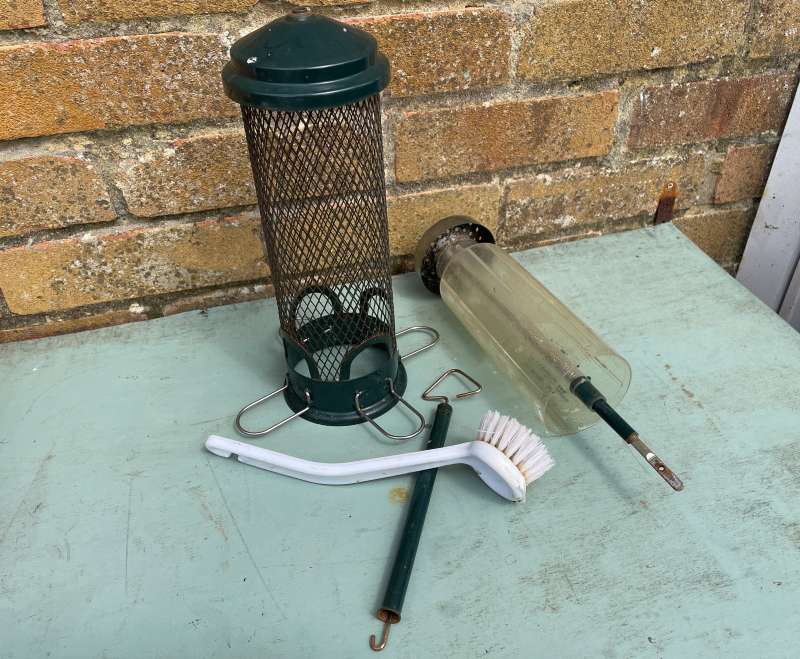
How often do you clean your bird feeders? Project FeederWatch recommends every week or two, and more often during wet weather or heavy use. Adding fresh seed doesn’t remove old food and droppings.
Wash feeders outside, in a bucket or tub reserved for the job. Here’s what to do:
- Empty the feeder and take it apart.
- Scrub the parts with warm water and dish soap.
- Rinse thoroughly.
- Let every part dry before refilling.
If birds appear sick, stop feeding and ask your state wildlife agency about disinfection. Don’t assume different cleaning solutions do the same job, and never mix bleach with vinegar or other cleaners.
Avian flu and local rules
Avian influenza, or bird flu, affects wild and domestic birds. Before feeding, check your state wildlife agency’s current advice. Follow any recommendation to take down feeders.
Found a sick or dead bird? Don’t handle it. The CDC advises avoiding contact and checking with state wildlife or health officials about reporting it. Stop feeding while you seek advice, as feeders can spread other bird diseases.
FAQs
Check with your state agriculture or wildlife agency and follow any recommendation to remove them. Keep wild birds away from poultry feed and water, and don’t set up a wild-bird feeding station beside the coop or run.
Yes, and ice can keep them from reaching it. An outdoor birdbath heater can keep the water from freezing. Project FeederWatch recommends changing the water daily and cleaning the bath regularly. Never use antifreeze in a birdbath because it’s poisonous.
Bird-feeder waste can damage grass if shells and uneaten food build up over it. A few dropped seeds aren’t the same as a wet layer left there all winter. Pick up spills before they accumulate or sprout.
Enjoy your birds and your yard
Watching birds visit your feeder is one way to enjoy your yard when it’s too cold to sit outside. And helping them through winter doesn’t have to mean more lawn problems in spring.
If winter leaves you with more yard work than you have time for, Lawn Love’s local yard cleanup pros can help with raking and seasonal cleanup.
Main Image: Downy woodpecker at a snow-covered bird feeder. Photo Credit: Hsiang / Adobe Stock
Related Posts: