| Key Takeaways |
|---|
| • Free fertilizers: Earthworm castings and coffee grounds add nutrients while feeding beneficial soil organisms. • Natural pest control: Castor oil, garlic, and hot pepper sprays deter rodents and other unwanted visitors. • Kitchen cabinet solutions: Baking soda fights fungus, cinnamon repels ants, and gypsum repairs dog urine spots. • DIY weed killers: Vinegar or boiling water eliminates weeds in sidewalk cracks and concrete (but keep them off your grass) |
Looking for simple ways to keep your lawn healthy without breaking the bank? These 10 creative lawn care hacks use everyday household items and natural methods to tackle common problems—from fertilizing with coffee grounds to repelling pests with cinnamon.
Skip the expensive products and complicated routines. Most of these budget-friendly hacks use items you already have at home, and they’re better for the environment too.
But, when your lawn needs serious help—like persistent disease, major pest infestations, or extensive bare patches—it’s time to call in professional lawn care services for expert treatment.
- 1. Earthworm castings for free fertilizer
- 2. Coffee grounds to boost nutrients
- 3. Shredded leaves as natural mulch
- 4. Gypsum to fix dog spots
- 5. Garden fork for small-area aeration
- 6. Vinegar or boiling water weed killer
- 7. Baking soda fungicide
- 8. Cinnamon pest and fungus repellant
- 9. Wooden plank for straight edges
- 10. DIY pest repellent sprays
1. Earthworm castings for free fertilizer
Those earthworm castings dotting your lawn aren’t a problem—they’re a bonus. Linda Brewer, senior faculty research assistant at Oregon State University, says earthworm castings and feces are nutrient-rich natural fertilizers that improve your soil for free.
Earthworms provide three major benefits:
- Soil aeration: Their burrowing (nightcrawlers dig up to 1 meter deep) naturally loosens compacted soil
- Deep nutrition: They pull organic matter deep into the soil profile
- Soil structure: Their mucus binds sand, silt, and clay particles together
How to do it: Rake the castings into the grass where soil bacteria will break them down and release nutrients.
Read more: How Earthworms Help Your Lawn and Soil
2. Coffee grounds to boost nutrients

Instead of tossing your coffee grounds (which I do every morning), save them instead.
Brewer recommends using coffee grounds as fertilizer that provides some nitrogen and micronutrients and encourages beneficial insects.
“The greatest benefit they have is providing organic matter for beneficial soil organisms (earthworms, nematodes, bacteria, and fungi),” she says.
Research also suggests coffee grounds may reduce the lifespan and slow the mobility of certain lawn-damaging flies. However, apply moderately—too much can harm your lawn.
How to do it:
- New lawns: Work ½ inch of coffee grounds into the top 4 inches of soil
- Established lawns: Apply ½ inch of dried grounds, then rake them down to the soil surface with a spring-type rake
Because you’ll need significant quantities for a full lawn, consider using coffee grounds in smaller areas or garden beds instead.
Read more: Benefits of Using Coffee Grounds as Fertilizer
3. Shredded leaves as natural mulch
Save time and energy raking and bagging those leaves—use them as free fertilizer.
Megan Tierney, extension agent for Agricultural and Natural Resources in Poquoson, VA, recommends shredding leaves so they decompose and enrich your lawn with nutrients.
Furthermore, Tierney recommends using hardwood leaves or pine straw as mulch in landscape beds, which benefits trees and plants while providing habitat for overwintering pollinator eggs.
How to do it: Add a mulching blade to your mower and chop leaves into a fine layer. “A standard mower blade will also do the job, just not as effectively,” Tierney says. For heavy leaf buildup, remove and compost the whole leaves instead.
Read more:
- What to Do With Fallen Leaves
- Is It Better to Rake or Mulch Leaves?
- The Best Way to Remove Leaves from Your Yard
4. Gypsum to fix dog spots

Dog urine burns grass because of its high nitrogen content, which essentially overfertilizes small areas. Gypsum (a mineral often used in construction) relieves compacted soil and helps your lawn recover from these brown spots.
How to do it:
- Flush the area with water
- Apply gypsum formulated for lawn care
- Water the lawn
- Repeat as needed
Read more:
- Why Dog Pee Kills Grass (And How to Stop It)
- 10 Lawn Care Tips for Dog Owners
- How to Repair Dog Pee Spots on Your Grass
5. Garden fork for small-area aeration
Regular aeration keeps soil loose and full of water, air, and nutrients. If you have a small lawn and don’t want to rent equipment, use a pitchfork to aerate manually. It’s hard work, but it saves money..
How to do it: Press the fork into the soil to a depth of 5 inches or more. Press down gently on the handle to slightly light the soil and relieve compaction. Remove the fork and repeat.
If you have heavy clay soil, a hollow tine aerator is more suitable.
Read more:
6. Vinegar or boiling water weed killer
Commercial post-emergent herbicides work well but carry toxicity risks. For weeds growing between tiles and concrete cracks (not on your lawn), vinegar or boiling water offers a non-toxic alternative. These kill the leaves but not the roots, so weeds will return.
How to do it: Mix 1 liter white vinegar with 3 tablespoons salt and 3 teaspoons dish soap. Apply directly to weeds using a spray bottle. Alternatively, pour boiling water instead.
Important restrictions:
- Only use on weeds in concrete cracks or between tiles
- Never apply to lawn or soil—it harms beneficial organisms and grass
- Catch weeds in their first two weeks when they’re small
- Wait 24-48 hours after rain before applying
- Avoid metal spray bottles and surfaces
Read more:
7. Baking soda fungicide
Baking soda absorbs moisture and stops fungus from growing, making it an effective alternative to commercial fungicides for lawn fungus problems.
How to do it: Mix 2 teaspoons baking soda with 1 gallon water. Apply to infected grass every three days until the fungus clears.
For persistent or severe fungal infections, professional lawn disease treatment provides faster, more effective results.
Read more: How to Treat Lawn Fungus
8. Cinnamon pest and fungus repellant

Everyone has cinnamon in their kitchen. This common spice fights fungi and repels lawn pests like ants. It’s one of the simplest and most affordable natural lawn treatments available.
How to do it: Sprinkle cinnamon on your whole lawn. That’s it. (Obviously, this might be better for small areas and not large lawns.)
9. Wooden plank for straight edges
Create neat lawn edges without buying an edger. A wooden plank and flat spade give you professional-looking results with items you likely already own.
How to do it: Lay a wooden plank where you want to edge. Drive a flat spade alongside it to create a clean border.
Warning: This is hard work. For large properties or regular maintenance, professional lawn edging services save time and effort.
Read more:
10. DIY pest repellent sprays
Create your own animal repellent using castor oil, garlic, or hot pepper. Griffin Dill, extension professional at the University of Maine, notes these sprays work as rodent repellents for a limited time—animals become accustomed to them quickly, but they’re worth trying if you have ingredients on hand.
3 natural repellent options
Castor oil spray: Mix 2 tablespoons castor oil with 1 gallon water and a little dish soap. Spray around your lawn.
Garlic spray: Crush and boil a few garlic cloves in 1 quart water, mix in dish soap, then spray around your lawn.
Hot pepper spray: Soak cut-up chili peppers or 1 tablespoon dried chili flakes in 1 quart water with dish soap overnight. Spray around your lawn.
Read more:
- How to Get Rid of Voles in Your Yard
- How to Get Rid of Moles in Your Yard
- How to Get Rid of Gophers in Your Yard
- How to Stop Squirrels from Digging in Your Yard
FAQs
Apply homemade treatments in early morning (6-8 a.m.) or late afternoon (4-6 p.m.) when temperatures are cooler and the sun is less intense. This prevents solutions from evaporating too quickly and reduces stress on grass. Avoid midday applications when heat can amplify effects—vinegar solutions become more acidic, and baking soda mixtures can burn grass in hot sun.
Natural pest repellents like castor oil, garlic, and hot pepper sprays typically remain effective for 3-7 days in dry conditions. Rain, irrigation, and heavy dew wash away these treatments, requiring reapplication. Animals also adapt to scents within 2-3 weeks, so rotate between different repellent types (garlic one week, hot pepper the next) for better long-term results. For persistent animal problems lasting more than a month, professional wildlife control offers more durable solutions than DIY sprays.
Most lawn hacks work safely together with proper timing. You can apply coffee grounds and rake in earthworm castings simultaneously, or use cinnamon and baking soda on different lawn sections. However, avoid mixing acidic treatments (vinegar, coffee grounds) with alkaline ones (baking soda, gypsum) in the same area on the same day—they neutralize each other. Space applications 3-5 days apart when using opposite pH treatments. Never combine pest repellent sprays in one mixture; apply separately to avoid chemical reactions.
When lawn care hacks don’t cut it
These lawn care hacks work great for minor issues and maintenance, but they’re not replacements for professional expertise. When you’re dealing with serious lawn problems—extensive disease, major pest damage, severe soil compaction, or large dead areas—DIY solutions often fall short.Lawn Love’s local experts handle everything from routine mowing and fertilization to specialized treatments like aeration, weed control, and leaf removal. Get a quote today and let the pros transform your lawn.
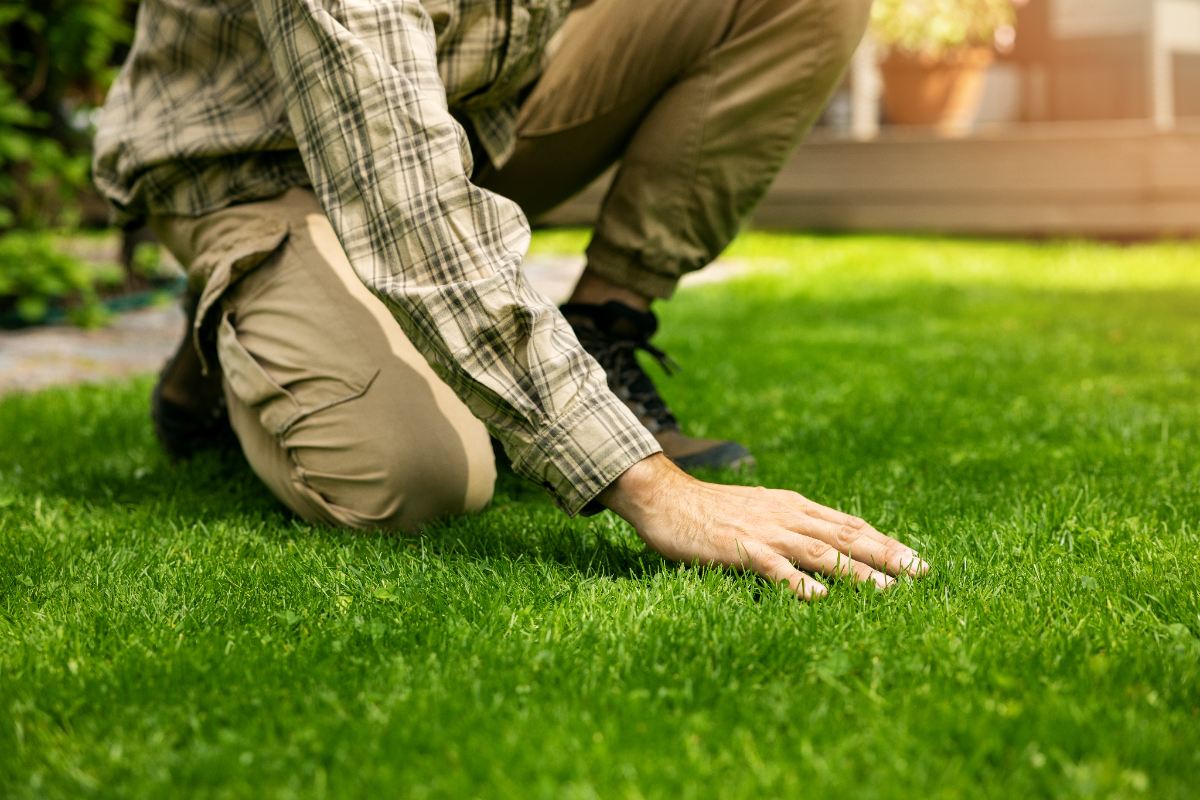
Main Image: Inspecting healthy lawn grass by hand. Image Credit: ronstik / Adobe Stock
Related Posts: