Getting rid of rust in the lawn starts with strengthening the grass. With proper mowing, watering, fertilizing, and airflow, most cases clear up on their own. However, in more serious cases, you may need fungicides to help stop the disease.
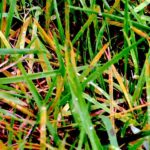
Rust is a common fungal disease that gives grass blades a powdery orange coating. It often appears in early spring through mid-summer when grass growth slows. While it usually won’t kill your lawn, it can weaken it and leave it vulnerable to more serious problems.
In this guide, I’ll walk you through simple, effective ways to get rid of rust and keep it from returning.
Improve air movement
Alfredo Martinez, professor and extension plant pathologist at University of Georgia Extension, explains that areas with good airflow helps dry grass blades; conversely, low airflow allows grass to stay damp, which can trigger rust infections.
Ginny Rosenkranz, principal agent associate at the University of Maryland, further explains, “Rust will occur when the temperatures are 60 degrees and the evening dew is on the lawn for over 10 hours.” That’s why areas with poor air flow are more prone to outbreaks.
Here’s how to improve air movement:
- Prune nearby trees or shrubs to let breezes flow over the turf.
- “Reduce thatch to minimize pathogen harboring and moisture retention,” says Martinez. If it’s more than ½ inch thick, dethatch to let air flow through the grass.
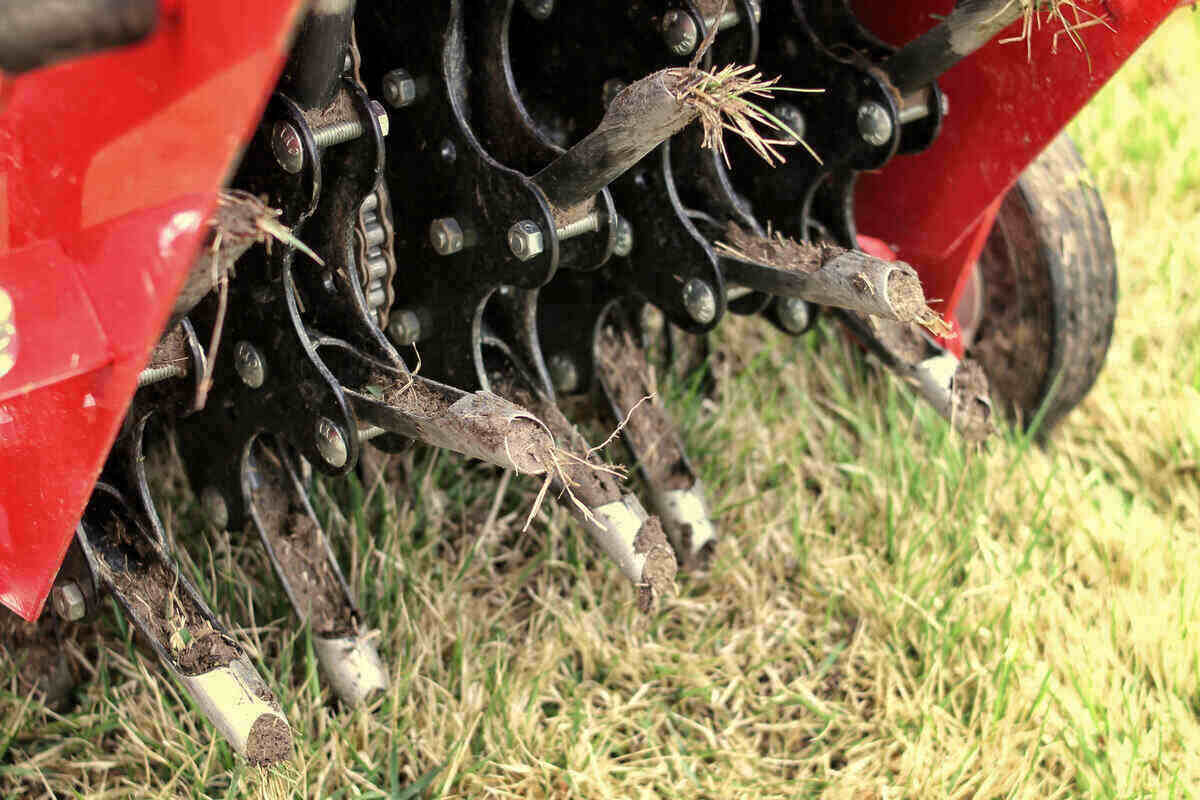
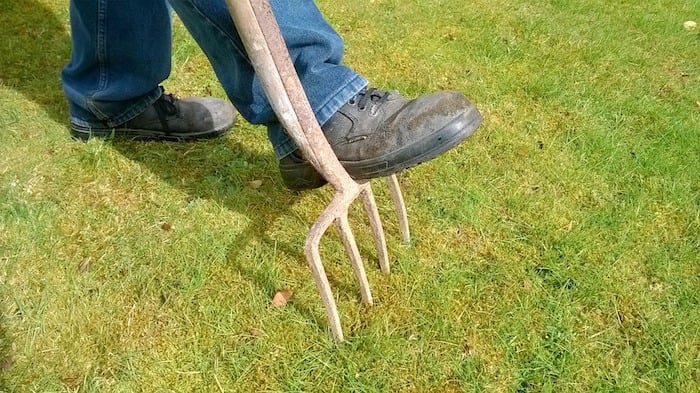
- Use spike or core aeration. “Both aerators create pores or holes in the soil to allow air and water to reach the roots,” explains Rosenkranz.
Read more:
Adjust your watering schedule
Rust thrives on wet grass blades, so the goal is to water in a way that reduces the time your grass stays damp. The rule: “Water deeply but infrequently and avoid late-day watering to minimize leaf wetness duration,” explains Martinez.
Give your grass time to dry between waterings. Overwatering not only leaves the blades damp but also discourages roots from growing deep in search of moisture. Shallow roots mean weaker grass.
I learned this the hard way. After years of giving my lawn light daily sprays, I realized it was doing more harm than good. Switching to deeper morning watering made all the difference; the rust faded, and the lawn became greener and healthier than ever.
Read more:
Fertilize properly

Healthy, well-fed grass is your lawn’s best defense against rust. The disease often appears on slow-growing, nutrient-starved turf, particularly when nitrogen is low.
Soil pH plays a big role, too. According to Rosenkranz, rust can also appear when the soil is too acidic or too alkaline. “It can attack lawns that don’t have the right soil acidity and don’t have the proper nutrients,” she explains. Most lawn grasses grow best when the soil pH is between 6 and 7, which is considered neutral.
To figure out what your soil needs, do a soil test to ascertain if your soil has the right pH and enough essential nutrients like nitrogen, phosphorus, potassium, or micronutrients.
Rosenkranz also advises fertilizing in the fall, when grass blades grow slowly but roots are still active and ready to absorb nutrients.
If your soil’s pH needs adjusting, apply agricultural lime or sulfur in the spring to bring it into the optimal range. To give your lawn an extra boost and help combat rust, Rosenkranz adds that “a top dressing of compost will also help to improve the soil structure and drainage.”
Read more:
- How to Change Your Soil pH
- 5 Ways to Apply Fertilizer
- When is the Best Time to Fertilize Your Lawn?
- How to Use Compost in Your Lawn and Garden
Mow properly
Regular mowing is a great weapon against lawn rust. Mowing trims the infected leaf tips and removes some of the fungus with it, explains Lina M. Rodriguez Salamanca at Iowa State University Extension.
I was hesitant to mow a rust-infested lawn, figuring it would spread the rust, but eventually discovered that regular mowing sped my lawn’s recovery.
The big takeaways:
- Mow at the right height: Avoid cutting the grass too short. Scalping or mowing below the recommended height stresses the grass, slows its growth, and gives rust a better foothold.
- Never remove more than ⅓ at a time: Mow often enough that you’re only cutting the top one-third of the grass blade in a single mowing. Taking off too much at once can shock the grass and slow its growth.
- Remove clippings: “Mow and remove clippings in infected areas to reduce spore spread,” says Martinez.
Read more:
Natural removal methods

In many cases, rust will clear up on its own once the weather shifts, provided your basic lawn maintenance routine is sound.
According to turf specialists at University of Illinois Extension, rust that develops in late summer often fades away naturally as cooler fall temperatures and better growing conditions help the grass rebound and grow more vigorously.
To naturally remove rust, focus on the cultural practices we’ve discussed:
- Encourage growth: Providing enough nitrogen and water helps the grass grow actively, which allows for regular weekly mowing. This frequent mowing helps remove the infected parts of the lawn, explains Dave Minner, emeritus professor at Iowa State University Extension.
- Reduce spore spread: Bagging clips and cleaning off your shoes and mower can cut down the spread of rust spores.
- Let nature help: Rust is a sign of stressed or slow-growing grass. Helping your lawn bounce back with proper watering, regular feeding, and a break from the heat can make a big difference. As the grass begins to grow more vigorously, it naturally pushes out the rust.
“A healthy lawn can fight off many lawn diseases and insect problems,” Rosenkranz says.
Apply fungicide treatment
Fungicides aren’t necessary for rust control in most lawns. Martinez cautions to use them only for severe or persistent cases.
When using fungicides, keep a few things in mind:
- Timing: Fungicides won’t fix rusted grass, but they do protect healthy blades and help stop the disease from spreading. They’re usually only needed if rust keeps coming back every year, despite good lawn care. In that case, apply a preventive treatment in mid to late summer, before rust appears.
- Product: Look for lawn fungicides that list rust on the label. Always read and follow the label instructions carefully. The label will tell you the correct dosage, watering requirements, and how often to reapply if needed.
- Lawn care practices: Remember that fungicides can’t replace good lawn care practices. If you simply spray a fungicide but continue to water improperly or neglect fertilizing, rust may return.
If you think your lawn might need treatment, Martinez says, “Always consult your local county Extension office for current fungicide recommendations and proper application timing.”
Overseed affected areas

Once rust is under control, you may find some patches of your lawn are thin or have weakened grass. Fall is a great time to overseed those areas to help the lawn recover and to introduce grass varieties that are more resistant to rust.
According to Martinez, rust affects many turfgrass types, including tall fescue, Kentucky bluegrass, zoysiagrass, and Bermudagrass. Lawns with a mix of different grass types tend to handle rust better than those made up of just one kind, so overseeding with a blend of compatible species can make your turf stronger.
Read more:
Make lawn rust a problem of the past
Lawn rust can be frustrating, but with smart care, like proper watering, mowing, fertilizing, and airflow, it’s manageable. If rust keeps coming back, overseeding or preventive treatments may help. For best results, LawnLove can connect you with a lawn care pro to handle aeration, fertilizing, mowing, or seeding. A little help can bring your lawn back to green and free up your weekend, too.
Sources:
- Alfredo Martinez. Professor and Extension Plant Pathologist-Turfgrass, Small Grains, Non-Legume Forages. University of Georgia Extension. Personal Interview.
- Ginny Rosenkranz. Principal Agent Associate. University of Maryland. College of Agriculture & Natural Resources. Personal Interview.
- “Turf Grass Rust.” By Lina M. Rodriguez Salamanca. Iowa State University Extension and Outreach.
- “Rust – To treat or not to treat.” By David Minner. Emeritus Professor. Department of Horticulture. Iowa University Extension.
Main Image: Rust in Tall Fescue. Image Credit: Alfredo Martinez | University of Georgia Extension
Related Posts: