| Key Takeaways |
|---|
| • Most lawns need annual aeration to combat soil compaction from foot traffic and weather. • Dethatching is only necessary when the organic layer exceeds 1/2 inch in thickness. • Use the screwdriver test for compaction and the finger test for thatch measurement. • Dethatch first if you need both treatments, then aerate during peak growing season. • Recovery takes 2-4 weeks. |

Most lawns need aeration every year, but dethatching only when thatch gets thicker than 1/2 inch. Use the screwdriver test to check for compacted soil and the finger test to measure thatch thickness. If your screwdriver won’t push easily into moist soil, you need aeration. If you can press your finger more than ½ inch into a spongy layer above the soil, you need dethatching.
The key is knowing which problem you actually have. Is it compacted soil requiring aeration, excessive thatch needing removal, or both?
Whether you tackle it yourself or hire a local lawn care pro, knowing which treatment you actually need saves time, money, and frustration.
Do most lawns need aeration or dethatching?
Most lawns need annual aeration to prevent soil compaction. Dethatching is only necessary when excessive dead grass and organic materials (thatch) build up.
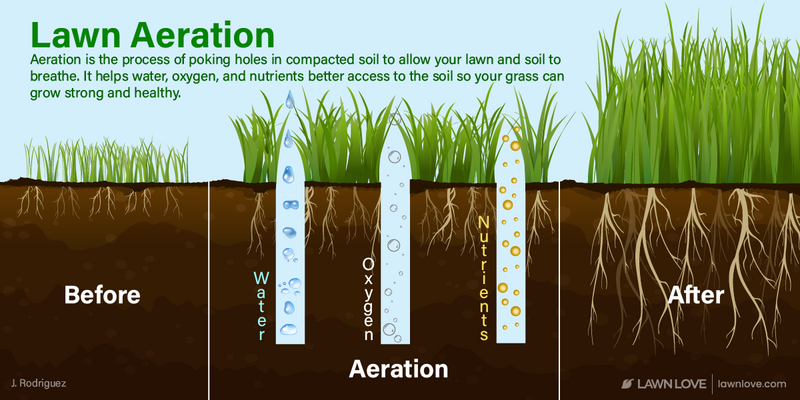
Aeration: Foot traffic, mowing, and weather compact soil in nearly every lawn. Compacted soil blocks air, water, and nutrients from reaching grass roots, like trying to drink a milkshake through a coffee stirrer instead of a straw. Healthy turfgrass needs at least 4-6 inches of uncompacted topsoil for proper root development, according to the Clemson Cooperative Extension.
Dethatching: This is only needed when thatch, a layer of dead stems, roots, and organic matter, gets too thick. A thin layer of 1/2 inch or less benefits your lawn, but more than that prevents water, air, and nutrients from reaching the grass roots. It also creates a perfect environment for disease and pests.
Your grass type determines your thatch risk. Some grasses naturally produce more thatch than others because they spread through stems that are slow to break down. High thatch producers include:
- Kentucky bluegrass
- Bermudagrass
- Zoysiagrass
- Creeping red fescue
- Creeping bentgrass
Regular core aeration increases microbial activity that breaks down thatch, according to Penn State Extension. Many lawns benefit from aeration alone without ever needing dethatching.
Read more:
How to tell if your lawn needs aeration (screwdriver test)

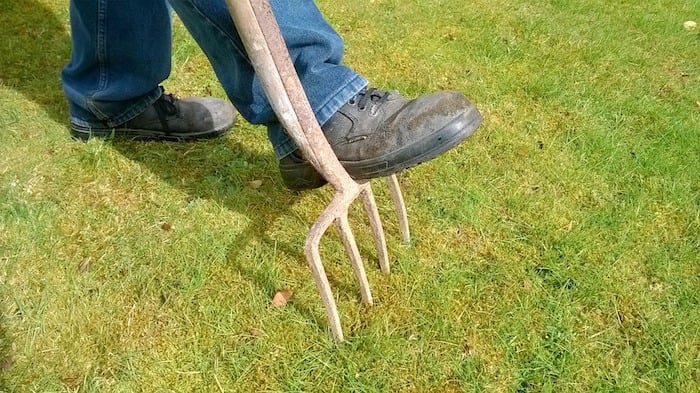
All you need is a 4- to 6-inch screwdriver or garden fork. This test takes less than a minute and shows whether compacted soil is blocking water and nutrients from reaching grass roots.
How to do the test
Water your lawn the day before or wait 1 to 2 days after rain so the soil is damp but not soaked. Push the screwdriver straight down into the soil, trying to get it at least 3-4 inches deep.
Test several spots around your yard since your front lawn might be fine while your backyard play area is rock solid.
What the results mean
Here’s how to interpret what you find:
| Test Result | What It Means | Action Needed |
| Screwdriver slides in easily to full depth | No compaction | No aeration needed |
| Moderate resistance, goes in 2-3 inches | Mild compaction | Aerate once this year |
| Hard to push in, gets stuck at 1 inch | Severe compaction | Aerate twice this year |
| Won’t go in at all | Extreme compaction | Professional aeration recommended |
Other signs your lawn needs aeration
“Compaction is best identified through symptoms such as poor drainage, shallow rooting, and resistance to soil penetration, while excessive thatch is defined by a spongy layer exceeding about ½ inch between the soil and green turf tissue,” according to Dr. Kelly Kopp, professor and extension turfgrass specialist at Utah State University
Beyond the screwdriver test, watch for these warning signs that indicate compacted soil:
- Water pools on top after rain instead of soaking in
- Grass stays thin or patchy even with regular fertilizing
- Lawn feels rock-hard when you walk on it
- Bare spots appear in high-traffic areas
- Grass wilts quickly in summer heat
- Weeds like dandelions and plantain are spreading
Compacted lawns struggle because squeezed soil particles leave little room for air and water movement, essentially suffocating your grass roots.
Read more:
How to tell if your lawn needs dethatching (finger test)
You can use your fingers for a quick check, or grab a garden trowel or spade for more precise measurements. These two methods can show if heavy thatch buildup is preventing water and nutrients from reaching the soil.
How to do the test
Go to multiple areas in your yard, as thatch buildup can vary across your property. Check both high-traffic zones and less-used sections to get an accurate picture of your lawn’s condition.
- Method 1: Quick finger test – Push your finger down through the grass toward the soil and feel for a brown, mat-like layer between green grass and soil. If you can push more than 1/2 inch into the spongy layer, you have too much thatch.
- Method 2: Accurate wedge test – Cut out a 2-3 inch deep wedge of lawn with a spade or trowel. Look at the side profile and measure the brown, stringy layer between grass blades and soil. If it’s more than 1/2 inch thick, you have too much thatch.
What the results mean
Here’s what your thatch measurements mean:
| Test Result | What It Means | Action Needed |
| Less than 1/2 inch | Healthy | No dethatching needed |
| 1/2 to 3/4 inch | Moderate buildup | Aerate to help break down thatch naturally |
| More than 3/4 inch | Too thick | Dethatching needed |
| More than 1 inch | Severe buildup | Professional dethatching recommended |
Other signs your lawn needs dethatching
Beyond the finger and wedge tests, watch for these symptoms that indicate heavy thatch buildup:
- Lawn feels spongy like carpet padding
- Water runs off instead of soaking in
- Fertilizer isn’t making your grass greener
- Fungal diseases keep showing up
- Lawn stays wet long after it rains
- Mower scalps the grass when wheels sink into thatch
When thatch gets thick enough, it becomes hydrophobic (water-repelling) and creates a barrier that prevents water, air, and nutrients from reaching the soil where roots need them.
Read more:
Aeration vs. dethatching: What’s the difference?
Now that you understand how to test for each problem, here’s a clear breakdown of what these treatments actually do and when you need them.
| Factor | Aeration | Dethatching |
| What it does | Pulls soil plugs to relieve compaction | Vertically cuts through thatch to remove dead organic matter |
| How often needed | Annually for most lawns | Every 3-5 years, only if needed |
| Stress on grass | Low | Moderate to high |
| Best for | All grass types, high-traffic areas | Kentucky bluegrass, Bermuda, zoysia with heavy thatch |
If you need to do both
If your tests show both compacted soil and heavy thatch, dethatch first, then aerate. Rake up all the debris before you start aerating so the tines can reach the soil instead of just snagging organic matter.
You can do both on the same day during peak growing season, but expect your lawn to be a bit stressed and give it some extra care while it recovers.
Read more:
Best time to aerate or dethatch your lawn

Timing is key for both treatments. Your grass needs to be actively growing so it can bounce back. Use your grass type to pick the best season for each service.
Aeration timing
| Grass Type | Best Time | Why |
| Cool-Season | Early fall or early spring | Active growth period for quick recovery |
| Warm-season | Late spring to early summer | Peak growth before summer heat |
What to avoid: Don’t aerate during drought conditions or extreme heat. The grass needs moisture to heal the holes quickly. Also, avoid aerating frozen ground, as the machine won’t be able to pull proper plugs.
Dethataching timing
| Grass Type | Best Time | Why |
| Cool-Season | Early fall or late spring | Avoids summer heat stress |
| Warm-season | Late spring to early summer | Avoids dormancy periods |
What to avoid: Never dethatch during heat stress, drought, or dormancy. Your grass needs vigorous growth to recover from the damage dethatching causes. Timing this wrong can set your lawn back for months or kill patches completely.
Read more:
- Lawn Care Calendar for Cool-Season Grass
- Lawn Care Calendar for Warm-Season Grass
- Best Time to Aerate and Overseed a Lawn
Next steps based on your test results
Here’s what to do based on your test results.
If you need aeration only
Schedule aeration during the right season for your grass type (check the timing chart above). Water your lawn the day before so the machine can pull clean plugs, and mark any sprinkler heads or buried utilities before you start. Call 811 a few days ahead to have underground utility lines marked for free.
Your lawn will look a little rough afterward, like someone poked thousands of tiny holes across it. Those soil plugs on the surface break down on their own within 2-4 weeks. Just leave them on the lawn. You should notice water soaking in better within days and thicker grass within a month.
Once you’ve confirmed compaction is the issue, aeration will deliver quick results.
“Actively growing roots respond immediately to the increased oxygen and reduced compaction aeration provides by expanding into newly created pore spaces,” says Kopp.
Cost: Professional aeration costs $104-$195 on average. Renting a core aerator yourself runs $60-$90 per day (equipment deposits vary by location).
If you need dethatching only
As with aeration, it’s best to dethatch when your lawn is actively growing and mow to about half the normal height beforehand. Dethatcher blades cut about 1/2 inch into the soil and can sever shallow lines. Call 811 ahead of time to locate underground utilities.
Your lawn won’t look pretty right after. Dethatching creates a lot of debris, so plan for cleanup and hauling. Water well for the first week to help your lawn bounce back, and toss some grass seed on any bare patches to speed up recovery.
Cost: Professional dethatching costs $65-$160 and usually includes debris removal. Renting a power rake runs $50-$80 per day (deposits vary by location), but heads up, it’s physically demanding work.
If you need both treatments
Always dethatch first. Rake up all the debris, then wait 1-7 days before aerating. Clearing the thatch first lets the aerator tines reach the soil instead of getting tangled in dead organic matter.
Doing both treatments puts extra stress on your lawn. If your grass is already struggling, you might want to hire a pro who can handle the timing and aftercare. Many lawn care companies bundle aeration and dethatching with overseeding, which gives your lawn a better shot at recovery.
Cost: Bundling both services with a lawn care company often costs less than booking each treatment separately.
Read more:
FAQs
Yes, spring aeration can disturb your pre-emergent herbicide barrier and bring dormant weed seeds to the surface. This is why fall is preferred for cool-season grasses. If you must aerate in spring, do it before applying pre-emergent and expect increased weed pressure.
Liquid aeration may help with light compaction in sandy soil, but it’s largely ineffective for moderate to severe compaction or clay soil. Core aeration physically removes soil plugs and provides immediate, proven results.
Wait at least one full growing season (about 12 months) after sodding or seeding before aerating. New grass needs time to establish deep roots. Dethatching is even more aggressive, so wait 2-3 years minimum before considering it on a newly established lawn.
It depends on how thick your thatch is. If it’s between 1/2 and 3/4 inch, multiple aeration passes over 2-3 years can gradually reduce it without dethatching. But if your thatch is over 3/4 inch thick, aeration alone won’t cut it — the heavy thatch blocks aerator tines from reaching the soil properly.
If you have severe compaction (screwdriver won’t penetrate) AND thick thatch (over 1 inch), hire a professional. This combination requires careful treatment sequencing — dethatch first, then aerate — and can severely stress your lawn if done incorrectly or at the wrong time.
A spongy feeling isn’t always thatch. It can come from mowing in the same pattern repeatedly (which compresses grass layers), hidden moss growth, or shallow roots growing horizontally due to compaction. Use the wedge test to cut into the soil and see what’s actually going on beneath the surface.
Double-check your results. What looks like thatch in tall fescue is often just dead grass clippings or moss sitting on top of the soil. True thatch is a fibrous, mat-like layer that’s tough to pull apart. Tall fescue rarely develops real thatch problems — you more likely need aeration or just a good raking.
It can. Dethatcher blades cut about 1/2 inch into the soil and can sever shallow irrigation lines or invisible dog fence wires. Before dethatching, mark all sprinkler heads, valve boxes, and any buried wires. Call 811 a few days ahead to have underground utilities marked for free.
End the guesswork for your lawn
Before aerating or dethatching your lawn, do the screwdriver test and finger test. Once you know the results, you can effectively treat the problem so you can get a thicker, healthier lawn that will benefit from the water and fertilizer you’re already applying.
Lawn Love can connect you with a local lawn care pro who can handle aeration, dethatching, and even your regular mowing to get your lawn back on track while you relax and enjoy a healthy, beautiful yard.
Read more:
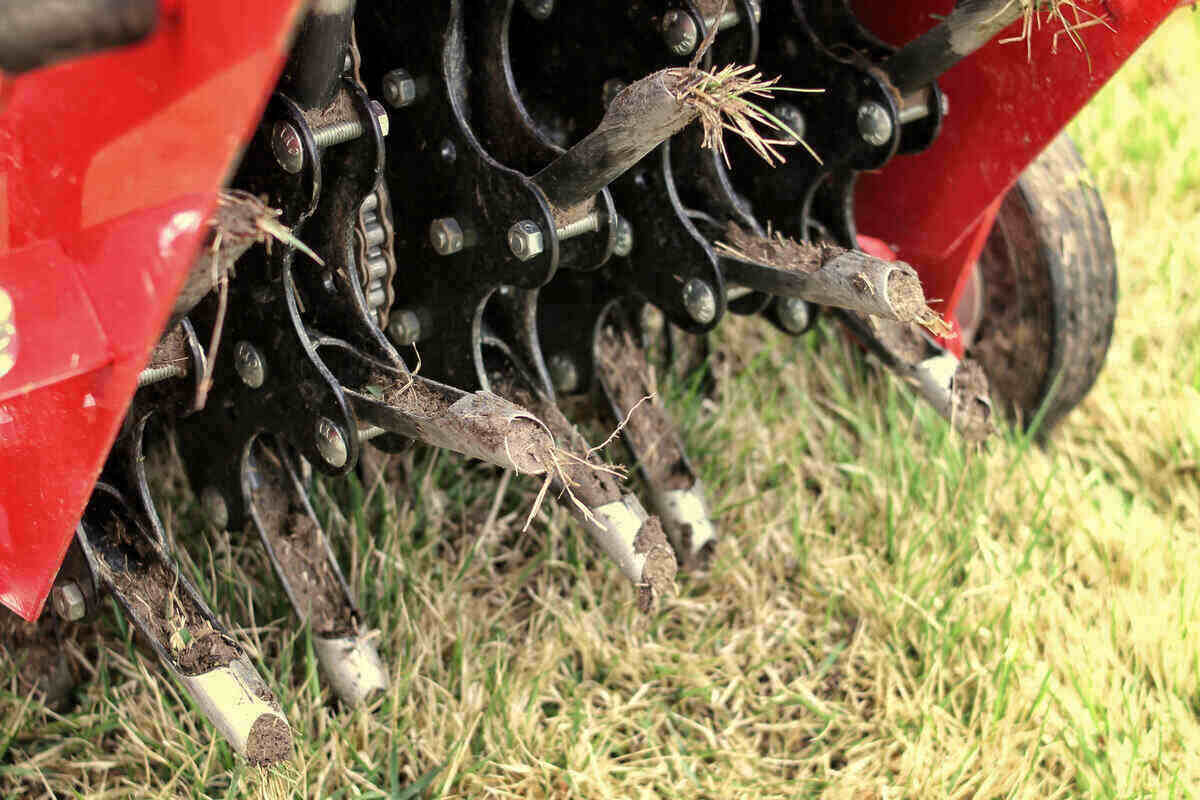
Main Image: Side by side image of Lawn Aeration and Dethaching Lawn.
Image Credit:
Aeration: Shutterstock
Dethatching: ronstik / Adobe Stock
Related Posts: