| Key takeaways |
|---|
| • Apply late summer fertilizer 6 to 8 weeks before your first fall frost: typically August in the North, mid-August to September in the South. • Use a slow-release fertilizer with potassium for winter hardiness; cap nitrogen at 1 lb. per 1,000 square feet per application. • Pair fertilization with aeration and dethatching for best results. |

Late summer lawn fertilizer is one of the most important applications for your lawn. It provides essential nutrients to help it recover from the exhaustive summer heat, prepares it for fall and winter, and encourages a thick, green lawn in spring.
Most homeowners are eager about lawn care in spring but lose steam by late summer. Don’t be one of them. If you’d rather hand off the timing and application, Lawn Love’s local lawn fertilization pros can match the right product to your grass type and soil conditions.
When to apply late summer lawn fertilizer

The perfect time for a late summer lawn treatment is 6 to 8 weeks before your first expected first frost. That timing lets the grass absorb nutrients, repair summer damage, and store energy in the roots before going dormant.
The biggest difference in your strategy comes down to what type of grass is sitting in your front yard.
Tammy Sons, founder and CEO at TN Nursery in Altamont, Tennessee, says your timing dictates everything.
“Cool-season grasses are going into one of their primetime growing seasons, while warm-season grasses will soon enter their dormancy period,” Sons says. “That’s why I’m usually more aggressive with the fall fertilizer for cool-season lawn and more conservative with warm-season grasses as they slow down for their winter dormancy.”
Here is how the timing breaks down by region per Illinois Extension and other state guides:
Northern states (cool-season grass): Begin in early August through early September. Don’t exceed 1 lb. of nitrogen per 1,000 square feet per application.
Transition zone (Midwest, Central): Aug. 15 through Sept. 15 is your sweet spot.
Southern states (warm-season grass): Wait until mid-August or early September. Skip if your grass is heading into dormancy with cooler nights.
Pacific Northwest: Milder weather allows applications up to mid-November.
Is it too late to fertilize my lawn? As long as your grass is still actively growing and you’re at least 4–6 weeks away from your first hard frost, you can still apply. Past that, the grass goes dormant. It won’t effectively absorb nutrients, so save your money and wait until spring.
Benefits of using late summer lawn fertilizer
Late summer is one of the best times to fertilize, as it will help with the recovery process come spring.
Some of the benefits of using fertilizers especially designed for the late summer to early fall application include:
- Stored nutrients for dormancy: Grass uses late-summer nutrients to build energy reserves in roots and rhizomes.
- Stronger roots for winter: Healthy roots survive freeze-thaw cycles and recover faster from cold injury.
- Earlier spring green-up: Lawns that go into winter well-fed wake up faster and out-compete weeds.
- Cold tolerance: Potassium specifically helps grass cells resist freeze damage.
According to NC State Extension, “nitrogen applications prior to November result in more nitrogen uptake by turfgrass and minimize the potential for nitrogen leaching during late fall and over-winter when the turfgrass is dormant.”
Revitalize essential nutrients (N-P-K)
Nitrogen, phosphorus, and potassium (the N-P-K trio) are the macronutrients your lawn needs most. Your spring application is probably long gone by August, so late summer is when to replenish.
| Nutrient | Late summer role | Typical timing window | Notes |
|---|---|---|---|
| Nitrogen (N) | Supports recovery and builds spring reserves | 6–8 weeks before first frost | Cap at 1 lb. actual N per 1,000 sq. ft. per application |
| Phosphorus (P) | Drives root growth and seed formation | Once in fall, then leave alone | Apply only if a soil test shows your lawn is low in P; many municipalities restrict P |
| Potassium (K) | Winter hardiness; strengthens cell walls against freeze damage | At least 6 weeks before first frost | Common in winterizer blends (e.g., 24-0-12, 12-0-24) |
| Micronutrients (Fe, Mn, B, Zn, Cu) | Disease resistance, chlorophyll production | Anytime soil test indicates deficiency | Often included in complete blends |
Potassium is a key nutrient heading into cold weather.
“Potassium is often termed a winterizer,” Sons says. “Although it is another nutrient that assists with cold tolerance, it aids the overall vigor of the plant which assists with water uptake and stress tolerance during the winter.”
You must be careful with how much nitrogen you apply.
“One of the biggest mistakes made by homeowners is to apply a lot of nitrogen too close to the freezing temperatures and frost,” Sons says. “It may tend to promote tender growth at a time of year when the grass would be better served by conserving its energy and preparing itself for dormancy and survival through the winter.”
Don’t forget these micronutrients: boron, copper, iron, manganese, zinc. They aren’t the big three, but they help your grass fight disease, produce chlorophyll, and run DNA synthesis and photosynthesis.
Pro tip: For late summer applications, use a slow-release fertilizer instead of a fast-acting one. Slow-release products are more expensive but deliver nutrients over months rather than days, and they’re much less likely to burn the grass.
Should you use inorganic or organic lawn fertilizer?
The organic vs. inorganic fertilizer debate is overblown as plants can’t tell the difference. What matters is matching the product to your timing, your soil test results, and your budget.
Inorganic (synthetic) fertilizers release nutrients quickly, are typically cheaper, and give predictable results. The downside: It’s easy to over-apply and burn the lawn, and continual use can damage soil structure and contribute to runoff. Purdue Extension recommends controlled-release nitrogen sources for most lawn applications.
Organic fertilizers release slowly and improve soil biology over time. The downside: slower visible results and a higher per-bag cost.
For late summer specifically, slow-release is the better choice. You want a steady nutrient supply through the cooling months, not a quick top-growth flush.
“Typically, I just tend to go with a slow-release granular fertilizer if I’m applying during late summer,” Sons says.
Get a soil test before deciding as it will tell you exactly which nutrients you actually need.
Read more:
- What is Slow-Release Fertilizer?
- Liquid vs. Granular Fertilizer
- What is Organic Fertilizer?
- Can You Combine Organic and Inorganic Fertilizer?
Best lawn care practices to follow in late summer
We cannot stress enough the importance of late summer lawn fertilizer application. With the right nutrients and correct application techniques, late summer provides a crucial opportunity to keep your lawn vibrant.
But apart from fertilization, it’s equally important to observe other lawn care practices to ensure your turf can endure the winter and give it a head start for the next spring. Some of the lawn care best practices to do in late summer include:
- Use proper mowing techniques. Anyone can run a lawn mower these days, but achieving a beautiful lawn can be very hard if you don’t know how to use it properly. And if you consider the specific height adjustments required by different grasses, it would be better to hire lawn mowing services instead.
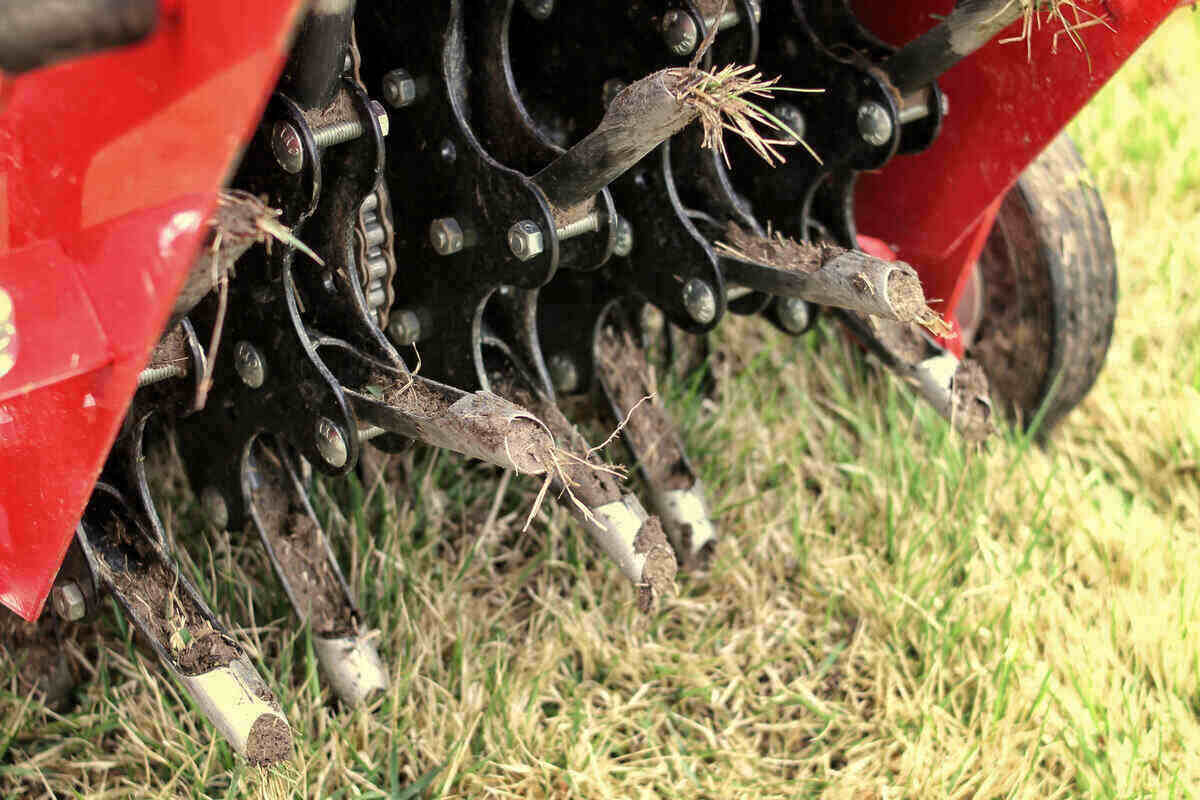
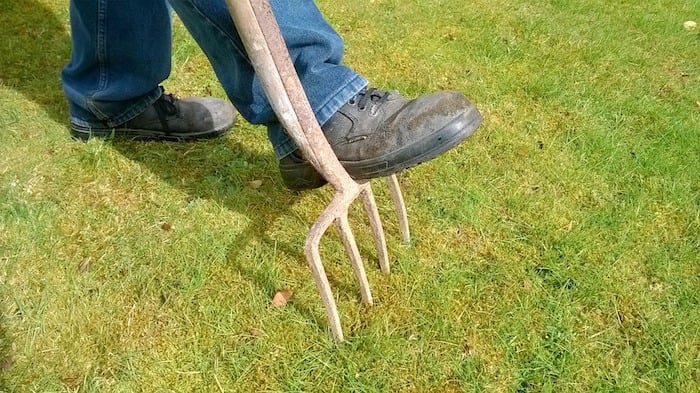
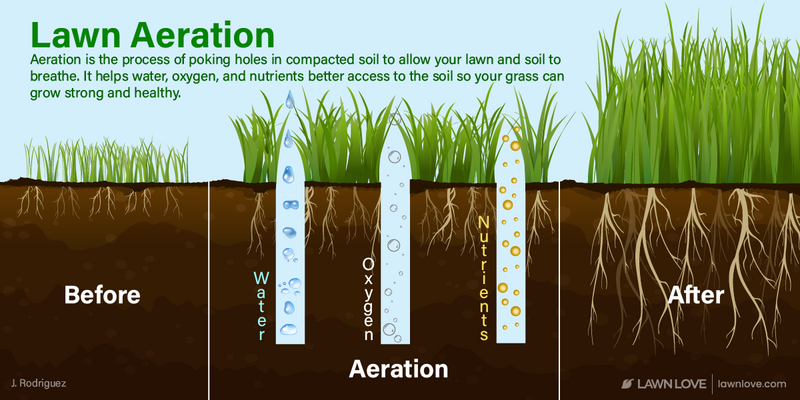
- Aerate the areas with heavy foot traffic. “A good tip is to aerate the lawn before you fertilize,” says Taylor Olberding, franchise owner at Heroes Lawn Care in Omaha, Nebraska.
“Aerating your lawn allows the fertilizer to penetrate the soil and get to the roots rather than just sitting on the thatch. If you don’t, you’re wasting money. There goes your half fertilizer in the next big rainstorm.”
- Dethatch early to help grasses recover. Dethatching in late summer is especially helpful for cold-season grasses. The timing allows your grass to re-establish its roots before facing a period of dormancy in the winter. Professional lawn dethatching costs around $145 to $247.
- Revitalize specific areas with seeding. Identify severely damaged or bare areas in your lawn and start seeding in late summer. This is an excellent time to establish new lawns and prepare the roots for active growth in the coming spring.
- Don’t burn your grass. We advise capping your nitrogen at 1 pound per 1,000 square feet for a reason. If you don’t, you will destroy your yard.
“Strip off more than that one pound of nitrogen, and you’ll know pretty fast you’re burning it,” Olberding says. “Your lawn is going to look scalded like someone took a blowtorch to it in weird stripes that match exactly where you walked with your spreader. Sometimes you’ll see a white crust on the dirt. That’s just the salt sucking all the moisture right out of the grass blades.”

Pro tip: If you have pets, you should use a pet-friendly lawn fertilizer. Also, allow at least 24 hours for the fertilizer to be absorbed before allowing your pets to play on the lawn.
Read more: Is Fertilizer Bad for Dogs?
FAQs
Cool-season grasses in the North can be fertilized through September, with a possible second application in November right before the ground freezes.
Warm-season grasses in the South should be done by mid-August, since fertilizing too close to dormancy can hurt the grass over winter.
If you apply nitrogen after the grass has stopped actively growing and after dormancy starts, the grass can’t use it. Worst case, the unused nitrogen leaches into groundwater (an environmental issue NC State Extension specifically calls out) and you’ve wasted both money and product. Late applications can also weaken cold tolerance and slow next year’s green-up.
The actual fertilizer you need to use for your lawn in late summer to early fall will depend on your local ordinances and the results of your soil test. If you’re living in a community that does not allow the use of phosphorus in lawn fertilizers, you’ll need to get an appropriate bag with 0 phosphorus value in the N-P-K ratio, like 21-0-21 or 24-0-12.
Pick a slow-release product with a higher potassium ratio than typical spring blends, and let your soil test results trump any general rule of thumb.
You can buy them, but you should not use them right now. Most weed-and-feed products are fast-release and pack a harsh herbicide that stresses out your grass.
“I tend to stay away from weed and feed products for late summer application,” Sons says. “A stressed lawn often has a greater chance of being stressed when combined with herbicide applications when it is already trying to recover from the summer heat.”
Treat your weeds separately with a targeted herbicide and use a dedicated slow-release fertilizer for nutrition.
Late summer lawns are often stressed from the heat, but fertilizer isn’t the cure for a drought.
“When brown, dormant areas of grass caused by drought are present, I generally recommend correcting the moisture issue first,” Sons says. “Fertilizing a severely wilted turf may not be helpful until growth resumes.”
You will see the payoff when the weather gets colder.
“The weather and timing will be right, and late fall when your neighbor’s lawn is brown, thin, patchy, and ragged, yours will still be green,” Olberding says. “Your grass will appear thicker, much more like a carpet, without room for weeds to grow. Plus, all that food gets stored in the roots. The following spring, your lawn is green before everyone else’s, and you never lifted a finger.”
Hand over the spreader
Getting late summer lawn care right takes perfect timing, the right products, and a chunk of weekend time you probably may not have.
If you’d rather skip pushing a spreader across your yard in the August heat, Lawn Love’s local lawn fertilization pros can handle fertilization, aeration, and the rest while you enjoy the last few weeks of summer.
Main Image: A man uses a broadcast spreader to seed or fertilize a residential lawn. Photo Credit: Scott Habermann / Adobe Stock
Related Posts: