| Key Takeaways |
|---|
| • Wait until soil temperatures reach 55 degrees F (cool-season) or 65 degrees F (warm-season) before applying spring fertilizer. • Use a fertilizer with a 3-1-2 or 4-1-2 NPK ratio for spring, not leftover fall fertilizer. • Check the weather forecast: heavy rain within 24-48 hours washes your investment into storm drains. • More fertilizer doesn't mean greener grass, and over-application causes fertilizer burn. • Calibrate your spreader and measure your product to prevent burning your grass. |
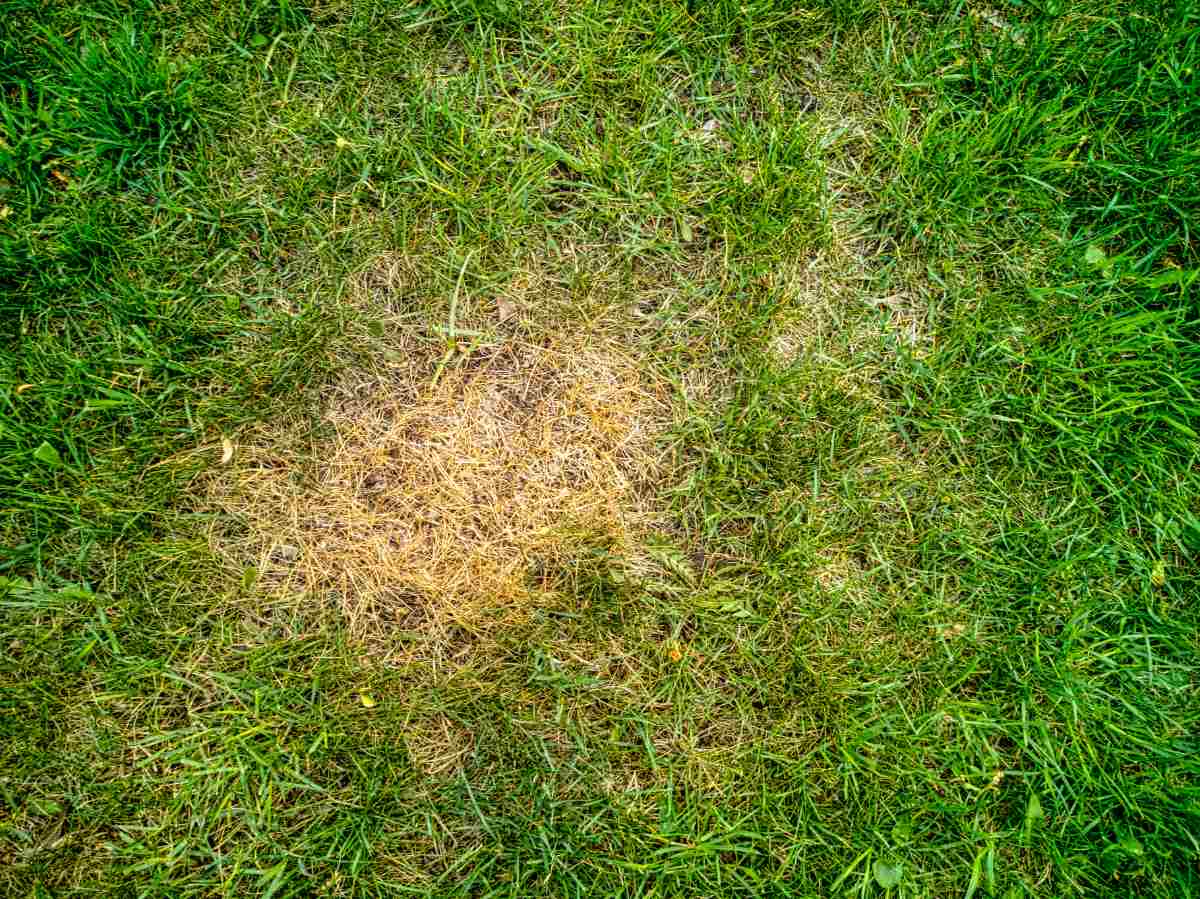
Americans spend over $36 billion on lawn care each year, and a big chunk of that goes to fertilizer. About 40 to 60 percent of fertilizer applied to lawns never reaches the roots. It washes away, leaches into groundwater, or sits on the surface doing nothing. Most of that waste comes down to bad timing and poor application.
The good news is that these mistakes are preventable. Get the timing, technique, and product right, and your lawn gets the nutrients it needs to green up thick and strong without burning cash or your lawn.
If you’d rather skip the hassle, Lawn Love can connect you with local lawn care pros who handle spring feeding with precision timing and the right formula for your grass type.
- Mistake #1: Applying too early
- Mistake #2: Using leftover fall fertilizer
- Mistake #3: Fertilizing before heavy rain
- Mistake #4: Overlapping spreader passes
- Mistake #5: Skipping starter fertilizer for new grass
- Mistake #6: Applying to wet grass
- Mistake #7: Mis-timing weed-and-feed
- How to get it right: Quick checklist
- FAQs
Mistake #1: Applying too early

Why it matters: Grass roots don’t become active until soil temperatures consistently reach 55 degrees F for cool-season grasses, or 65 degrees F for warm-season varieties. When grass is dormant, fertilizer has nowhere to go. Nitrogen leaches below root systems and can end up in groundwater.
“I can’t tell you how many people see something wrong with their plants and dump fertilizer on it, when sometimes, oftentimes, the problem is actually excess nutrients,” says Lindsey Kerr of Michigan State University Extension. “pH is also extremely important in understanding plant health and if a plant is able to access the nutrients in the soil.”
The cost: Wasted product plus potential environmental fines. Some cities limit use of lawn fertilizers due to potential runoff that can affect water supplies. In New York, the Nutrient Runoff Law prohibits all lawn fertilizer application from Dec. 1 through April 1, with penalties up to $500 for a first violation.
How to avoid it: Check soil temperature at 3-4 inch depth before your first application. A basic soil thermometer costs $5-$15 at garden centers. A soil test from your local extension office or garden center typically costs $15-$30, and tells you what nutrients your lawn needs before you spend money on products applied too early to matter.
Read more:
Mistake #2: Using leftover fall fertilizer
Why it matters: Fall fertilizers have higher potassium levels to build cold tolerance. Spring fertilizers emphasize nitrogen to fuel active growth. Using the wrong formula means slow green-up and weak growth response when your lawn is in its growth stage.
The cost: That fall bag of fertilizer cost you $15 to $40 last season. Using it now won’t save money. You’ll still need to buy a spring formula to fix the slow green-up and weak growth. It will cost you more time and effort than if you started with the right product.
How to avoid it: Check the N-P-K ratio on your bag. For spring, look for 3-1-2 or 4-1-2 ratios (like 16-4-8). If your bag has a high third number (potassium) relative to the first (nitrogen), save it for fall.
Read more:
Mistake #3: Fertilizing before heavy rain
Why it matters: Light rain after fertilizing can help wash granules into the soil. A downpour does the opposite, creating runoff that carries fertilizer off your lawn and into storm drains. Your lawn gets zero benefit while local waterways get an algae problem.
The cost: Complete product loss. At $15 to $40 per bag, that’s money literally washing down the storm drain. You’ll need to buy more and reapply once conditions improve, doubling your expense. The environmental cost matters too: runoff fuels algae blooms that kill aquatic life, and nitrates can seep into groundwater and contaminate drinking water.
How to avoid it: Check the 3-day forecast to make sure there is no heavy rain expected for 24-48 hours. After applying, wet the lawn (don’t soak it) to wash granules into the root zone. The best time to water is 6-10 a.m. since cooler temperatures reduce evaporation and give grass time to dry before evening, reducing disease risk.
Not sure about timing or technique? Lawn Love can connect you with local lawn care pros who know your region’s weather patterns and optimal application windows.
Mistake #4: Overlapping spreader passes

Why it matters: When you overlap passes, you’re applying twice the recommended rate to those strips. The result is fertilizer burn, which shows up within days as yellow or brown streaks across your lawn.
I learned this one the hard way. I got distracted mid-application, lost track of where I’d already walked, and a week later had crispy brown racing stripes running through my lawn. It took me most of the summer for those sections to fill back in.
The cost: Damaged turf that takes weeks to recover. If burn is severe enough to require reseeding, you’re looking at $2 to $15 per pound for grass seed depending on variety, plus the time waiting for new grass to establish.
How to avoid it: Calibrate your spreader per manufacturer instructions. Walk at a consistent pace. Use flags or string to mark your passes. If you see visible granules sitting on the grass surface, water immediately to help dilute and move the product into the soil.
Read more:
Mistake #5: Skipping starter fertilizer for new grass
Why it matters: Established grass and new seedlings have different nutritional needs. Maintenance fertilizers prioritize nitrogen for leaf growth, but seedlings need phosphorus to develop strong root systems. Without it, roots stay shallow and plants struggle to establish.
The cost: Poor germination and weak root development often mean you’ll need to reseed. Grass seed costs $2-$15 per pound depending on variety, and reseeding a patchy lawn requires 2-4 lbs. per 1,000 square feet. That’s potentially $30 to $60 in wasted seed for a typical 5,000-square-foot lawn, plus your time starting over.
How to avoid it: Use a starter fertilizer with balanced ratios like 10-10-10 or 16-8-8 at planting time. Apply at 0.5 to 1 lb. nitrogen per 1,000 square feet. Amounts exceeding 1.5 lb. nitrogen per 1,000 square feet can burn young turf.
Starting a new lawn from seed? Lawn Love can connect you with local landscapers who handle seeding, starter fertilizer, and ongoing care so your new grass gets established right from the start.
Read more: How to Plant Grass Seed
Mistake #6: Applying to wet grass
Why it matters: Wet grass causes granular fertilizer to stick to blades instead of falling to the soil. The product clumps and never reaches the root zone, and concentrated granules sitting on leaf surfaces cause localized burn spots. This applies to any granular product, including weed-and-feed and pre-emergents.
The cost: Patchy results requiring reapplication. You’ve wasted part of your $15 to $40 bag, plus burned spots may need overseeding at $2 to $15 per pound to recover.
How to avoid it: The best window for fertilizer application is mid-morning to early afternoon, roughly 9 a.m. to 2 p.m. By then, morning dew has evaporated but you’re still avoiding the hottest part of the day when heat stress can compound any application issues.
Read more:
Mistake #7: Mis-timing weed-and-feed
Why it matters: Pre-emergent herbicides need to be applied before soil temperatures hit 55-60 degrees F, ideally once soil has averaged 50-55 degrees F for about 5 consecutive days. But that’s too early for spring fertilizer on cool-season lawns, and warm-season lawns need soil temps at 65 degrees F. You end up either feeding the lawn before it’s ready or applying pre-emergent weed control too late.
The cost: Weed-and-feed products typically cost $20 to $50 per bag. Miss the application window and you’ve wasted that investment on weed control that won’t prevent crabgrass, or forced fertilizer on a lawn that can’t use it yet.
How to avoid it: Separate your weed control and fertilization. Apply pre-emergent when soil temps approach 50-55 degrees F. Fertilize when the lawn is actively growing and has been mowed at least twice.
Juggling pre-emergent timing and fertilizer schedules can get complicated. Lawn Love can connect you with local lawn care pros who build custom treatment plans based on your grass type and climate.
Read more:
- When to Water After Applying Weed and Feed
- Is Weed and Feed Bad for Your Lawn?
- When to Apply Pre-Emergent Herbicide
How to get it right: Quick checklist
- Soil temperature check (55 degrees F cool-season, 65 degrees F warm-season)
- Soil test completed
- Weather forecast reviewed (no heavy rain for 24-48 hours)
- Correct N-P-K ratio for spring (3-1-2 or 4-1-2)
- Spreader calibrated
- Grass is dry
FAQs
Yes, but you’ll wait longer to see results. Organic fertilizers depend on soil microbes to break down nutrients, so they release more slowly than synthetic. That’s great for long-term soil health but means a slower green-up in spring. They also need warm soil to work since microbial activity kicks in around 50 degrees F and ramps up as temps rise. Apply before that and the product just sits there.
Grass roots are dormant in cold soil and can’t absorb nutrients. The fertilizer sits on the surface until rain washes it away as runoff, wasting your money and potentially contributing to waterway pollution. Wait until soil temps hit 55 degrees F (cool-season) or 65 degrees F (warm-season) before your first application.
It depends on your grass type. For cool-season grasses like Kentucky bluegrass and fescue, fall is the most important feeding since it builds root reserves for winter. For warm-season grasses like Bermuda and St. Augustine, fertilize late spring through summer when they’re actively growing.
Stop burning money (and your lawn)
Spring fertilization doesn’t have to be complicated. It comes down to patience and preparation: wait for the right soil temperature, check your forecast, use the correct formula, and calibrate your equipment. Skip any of these steps and you’re likely wasting product on a lawn that can’t use it yet, or worse, damaging the turf you’re trying to help.
If you’d rather spend your free time doing other things than trying to perfectly time your lawn fertilization, Lawn Love can connect you with local lawn care pros who handle fertilization, weed control, and aeration so your lawn gets what it needs at the right time. Get a free quote and see how easy spring lawn care can be.
Read more:
- Spring Lawn Care: 12 Essential Steps to Green Up Your Lawn
- Common Spring Lawn Pests
- When Should You Mow Your Lawn in Spring?
Main Image: Brown spot in lawn grass after excessive fertilizer use. Image Credit: Oskars / Adobe Stock
Related Posts:


