| Key takeaways |
|---|
| • Liquid aeration is easy to apply and leaves zero mud plugs on your grass. • It's not a substitute for mechanical core aeration when your soil is actually compacted. • Liquid results depend entirely on the specific formula and your current soil conditions. |

Liquid aeration is a spray-on soil treatment marketed to fix dry, hard yards. Unlike mechanical core aeration it doesn’t physically pull plugs of dirt out of the ground.
There are many pros and cons of liquid aeration. The biggest upside is convenience: it’s easy to apply, leaves no messy soil plugs behind, and reaches tight corners where heavy machines cannot fit. Unfortunately, it’s not a proven replacement for core aeration if you have true soil compaction.
If your lawn feels hard, drains poorly, or has thinning grass, aeration helps air, water, and nutrients reach the roots. Here’s an honest look at where liquid aeration shines, where it falls short, and how to decide, or you can skip the guesswork and let Lawn Love’s local aeration pros handle it.
What is liquid aeration?

Liquid aeration and core aeration share the same goal: helping air, water, and nutrients reach grass roots. The difference is the method.
Unlike core aeration, which punches holes and pulls plugs with a heavy machine, you apply liquid aeration with a sprayer that uses surfactants, wetting agents, humic substances, seaweed extracts, nutrients, or microbial additives to help water move through the soil more easily.
Taylor Olberding, founder and co-owner at Heroes Lawn Care in Omaha, Nebraska, explains the chemistry:
“Liquid aeration uses a soap-like chemical, ammonium laureth sulfate, to break through the surface tension of packed clay.”
Surfactants force water to spread and move through water-repellent soil. They don’t physically create the open pore space that core aeration makes by ripping plugs out of the ground.
Liquid vs. core aeration at a glance:
| Factor | Liquid aeration | Core aeration |
| Method | Sprayed-on product; ingredients vary by brand | Machine pulls small soil plugs |
| Soil disruption | No plugs or holes | Leaves plugs and soil cores that break down |
| Best for | Minor wetting or infiltration issues | Moderate–heavy compaction and overseeding prep |
| Results | Product- and soil-dependent | Immediate |
| Lawn appearance | No visible plugs | Temporary plugs on the lawn |
| Typical pro cost | $90-$145 per application | $104 – $195 for one treatment |
| Best timing | Follow product label during active growth | Cool-season: early fall Warm-season: late spring to summer |
✓ Pros of liquid aeration
Liquid aeration offers several key benefits, such as:
Minimal soil disruption
Liquid aeration leaves no holes or soil plugs on your lawn like core aeration, so no cleanup is necessary afterward. Plus, you’re not disturbing the soil or grass. As a less invasive process, there’s less risk of grass damage. Your lawn can grow thick, healthy, and lush with minimal stress.
Easy application
You can spray liquid aeration products with a standard hose-end or pump sprayer. There’s no need to rent or purchase heavy aeration machines, and one treatment takes less time than core aeration. You still have to follow the product label to the letter. Use the correct dilution rate, wear protective gear, avoid spray drift, and keep kids and pets off the wet grass.
Full-surface coverage
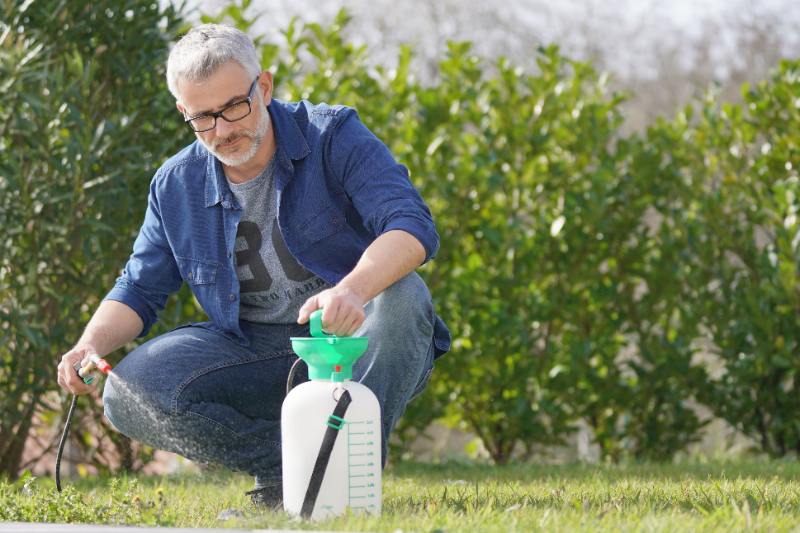
Because it’s a liquid spray, it covers areas mechanical aerators cannot touch. These include tight corners, narrow strips, or spaces with obstacles like trees, shrubs, or hardscaping elements.
As Olberding points out, “Liquid spray reaches 100% of the soil area; machines can treat a maximum of 10%.”
Liquid coats the whole surface, while core aerators only affect the specific spots where tines pull plugs. Still, multiple core-aeration passes punch enough holes to improve air exchange in compacted soil.
Only apply liquid products to areas listed on the label. Avoid spraying flower beds, edible gardens, or water features unless the bottle says it is safe.
No damage to your yard
Since there’s no machine to dig into the soil, liquid aeration protects against damage to utility lines, hoses, plants with shallow roots, sprinkler heads, or irrigation lines used in sprinkler systems.
Olberding says that terrain, layout, and obstacles often make liquid aeration the logical choice.
“I understand why you’d be skeptical of liquid over customary core machines,” Olberding says. “However, if your yard is level, it may be cheaper to rent a powered machine. Short gates, steep slopes, and dog wires below the grass may preclude power.”
Mark Trosin, owner at Lawnscapes in Coventry, Rhode Island, shares a real-world scenario where property terrain made mechanical equipment unusable.
“We once worked on a property with highly compacted, steep terraced slopes where heavy mechanical aerators were too dangerous to operate,” Trosin says. “By applying a liquid aerator twice over a six-week span, the soil softened enough to dramatically improve water absorption and eliminate runoff.”
Better long-term soil health
Some liquid aeration products contain wetting agents or organic amendments meant to force water through dry or uneven soil. The perks include better water infiltration, less pooling in minor problem areas, and more even moisture distribution.
Having managed thousands of Rhode Island lawns since 1988 as a licensed fertilizer applicator, Trosin has seen these biological ingredients make a visible difference in thatch layers over time.
“I’ve seen liquid aeration products like Air-8 visibly reduce thatch when paired with consistent, ongoing lawn care,” Trosin says. “Over a full season of our regular maintenance programs, these biological applications stimulate soil microbes to actively break down the organic layer.”
However, homeowners should keep expectations realistic regarding heavy buildup.
“Do not expect thick thatch to dissolve, despite microbial claims,” Olberding says.
Liquid aeration will not fix your soil pH. Get a soil test if you think your lawn needs lime, sulfur, or fertilizer. If you have thick thatch, you need a mechanical dethatcher, not a spray bottle.
✗ Cons of liquid aeration
Like most lawn care treatments, liquid aeration also comes with some downsides you should know about:
Results can be inconsistent
A liquid aeration treatment might do absolutely nothing for heavy compaction. One yard might see better water penetration, while another needs French drains, dethatching, or core aeration to see any change.
“Tests show that two to three applications over three months break up hard clay to a depth where roots can penetrate,” Olberding says.
Higher overall cost
Marketing pitches sell liquid aeration as the cheap alternative to core aeration. This is because it doesn’t require equipment; all you need is a sprayer and the liquid product of choice, which is relatively inexpensive.
However, since liquid aeration usually requires multiple applications, it can be more expensive in the long run. Buying the product multiple times can quickly exceed the cost of core aeration.
| Option | Typical cost |
| Liquid aeration | $10 – $50 per application (depending on lawn size) |
| Professional liquid aeration | $90-$145 per application |
| Professional core aeration | $104 – $195 for one treatment |
A DIY liquid bottle is inexpensive, but multiple applications will cost you more than one targeted core-aeration visit.
“It costs a little more per year, but saves on the replacement of broken lines and unsightly dirt plugs,” Olberding says.
Limited effectiveness on heavy compaction
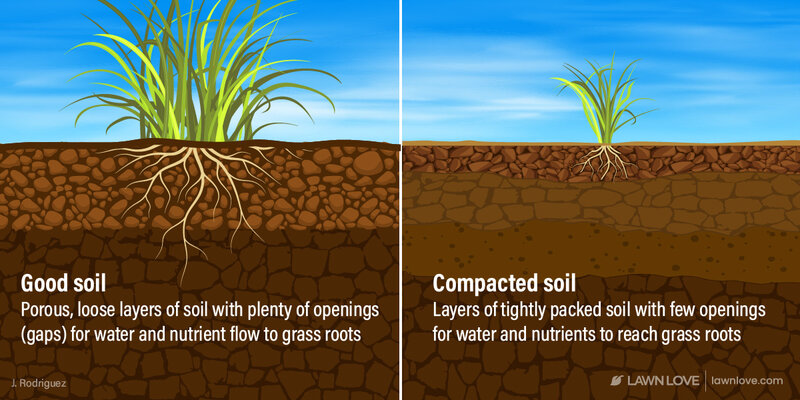
Liquid aeration might fix minor water pooling, but it doesn’t remove soil or create the open channels required to fix serious compaction.
In fact, experts at Colorado State University say liquid products are not as effective as traditional methods.
“Simply stated, there is no ‘chemical’ substitute for physical remediation of soil compaction – namely the traditional core cultivation techniques that have been used for years on all types of turf areas.”
If your yard features heavy clay soil, standing water, shallow roots, or thinning grass in high-traffic areas, stick with core aeration.
Mixed product quality
Look past the marketing hype and focus on the back of the bottle. Check for identified active ingredients, clear dilution instructions, safety warnings, and compatibility with your grass type.
If you don’t know whether your lawn is suffering from compaction, poor drainage, or bad irrigation, ask a pro before you waste money on repeat liquid applications.
Weather sensitive
Liquid aeration works best when your grass is actively growing and the weather cooperates.
- Avoid windy days that cause spray drift.
- Avoid extreme heat, dry conditions, frozen soil, and heavy rain that washes the product straight into the gutter.
When to apply liquid aeration
Apply liquid aeration only when your grass is actively growing and the product label allows it.
- For cool-season lawns: Early fall is usually the best time.
- For warm-season lawns: Best during active growth in late spring or summer.
FAQs
Yes, assuming the label lists your grass type and you apply it during active growth. However, compatibility doesn’t mean it will cure soil compaction. Core aeration is the established fix for packed dirt.
Follow the exact product label, since rates and schedules vary by brand. Don’t use a liquid schedule to mask a real lawn problem.
If the soil is compacted, schedule a mechanical core aeration based on your traffic and soil type.
You can overseed after liquid aeration if the product label allows it. Liquid aeration doesn’t create the physical holes, so it won’t improve seed-to-soil contact the way core aeration can.
Help your lawn stay healthy
Liquid aeration is a low-disruption treatment for lawns with minor wetting problems, but don’t treat it as a magic cure for serious soil compaction.
Let Lawn Love connect you with a local expert who can aerate your lawn and provide other services, including mowing, weed control, fertilization, and seeding.
Main Image: A cross-section of a lawn reveals a shallow root system above compacted soil. Photo Credit: Влад Варшавский / Adobe Stock
Related Posts:


